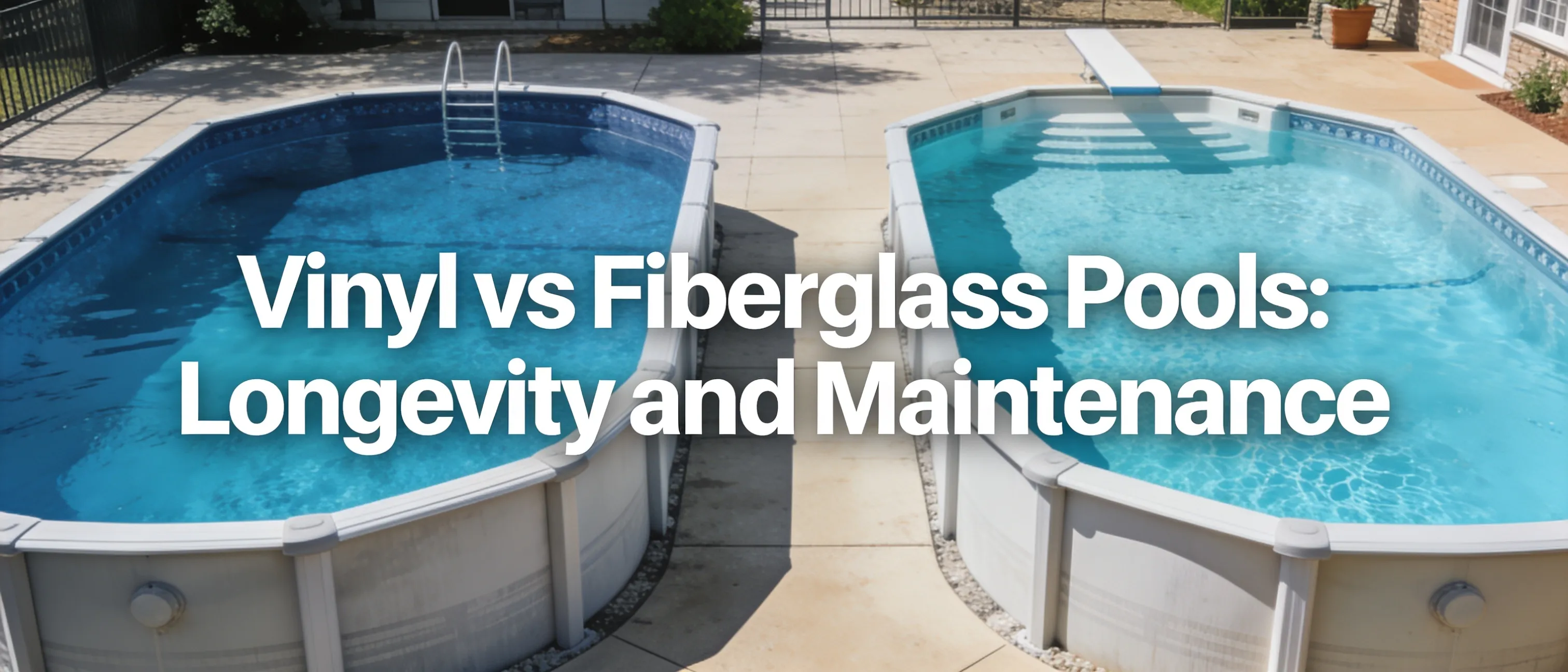
Fiberglass pools offer a smooth, non-porous surface that resists algae growth, reducing chemical demand and long-term maintenance costs. Vinyl liner pools carry lower upfront installation costs but require periodic liner replacement as the material ages. Santarossa Group installs both fiberglass and vinyl inground pools, helping Windsor-area clients select the option that best fits their durability goals and budget.
Key Takeaways
-
Vinyl pool liners require replacement every 10–15 years, adding long-term maintenance costs to ownership.
-
Fiberglass pools resist algae growth, reducing chemical usage and saving owners significant annual maintenance expenses.
-
Fiberglass pool installations typically carry a higher upfront cost than comparable vinyl pools.
-
Vinyl pools offer greater customization in size and shape, giving homeowners more design flexibility overall.
Which Pool Type Lasts Longer Over Time?
Fiberglass pools deliver superior long-term durability compared to vinyl liner pools, making fiberglass the stronger choice for homeowners prioritizing minimal upkeep over decades. Vinyl liner pools introduce a recurring replacement cycle that fiberglass pools simply do not share.
Fiberglass pools arrive as pre-formed, single-unit structures engineered for durability and low maintenance from day one. The construction method reduces the structural vulnerabilities that cause other pool types to deteriorate prematurely. Fiberglass holds its shape and surface integrity across many years of regular use without the periodic material replacements that vinyl demands.
Vinyl liner pools, by contrast, require liner replacement approximately every 8 to 12 years. Each replacement cycle represents a recurring long-term cost that homeowners must budget for throughout the life of the pool. Vinyl liners are also more susceptible to damage from sharp objects and heavy use, which shortens the interval between replacements in active family settings.
|
Factor |
Fiberglass Pool |
Vinyl Liner Pool |
|
Durability |
High — single-unit structure |
Moderate — liner subject to damage |
|
Liner Replacement |
Not required |
Every 8–12 years |
|
Maintenance Demand |
Low |
Moderate to high |
How Often Does a Vinyl Pool Liner Need to Be Replaced?
Vinyl pool liners typically require replacement every 8 to 12 years under normal conditions. Heavy use, sharp objects, and chemical imbalances accelerate wear and shorten that window considerably.
Does Fiberglass Really Require Less Maintenance Than Vinyl?
Fiberglass pools are recognized industry-wide for low maintenance demands relative to other pool types. The smooth, non-porous surface resists algae growth and reduces the frequency of chemical treatments needed to keep water balanced.
Santarossa Group installs both vinyl inground pools and fiberglass inground pools. The team also performs liner replacements for existing pools. Giving clients in Windsor and Essex County a single, experienced contractor for every stage of pool ownership.
How Does Maintenance Differ Between Pool Types?
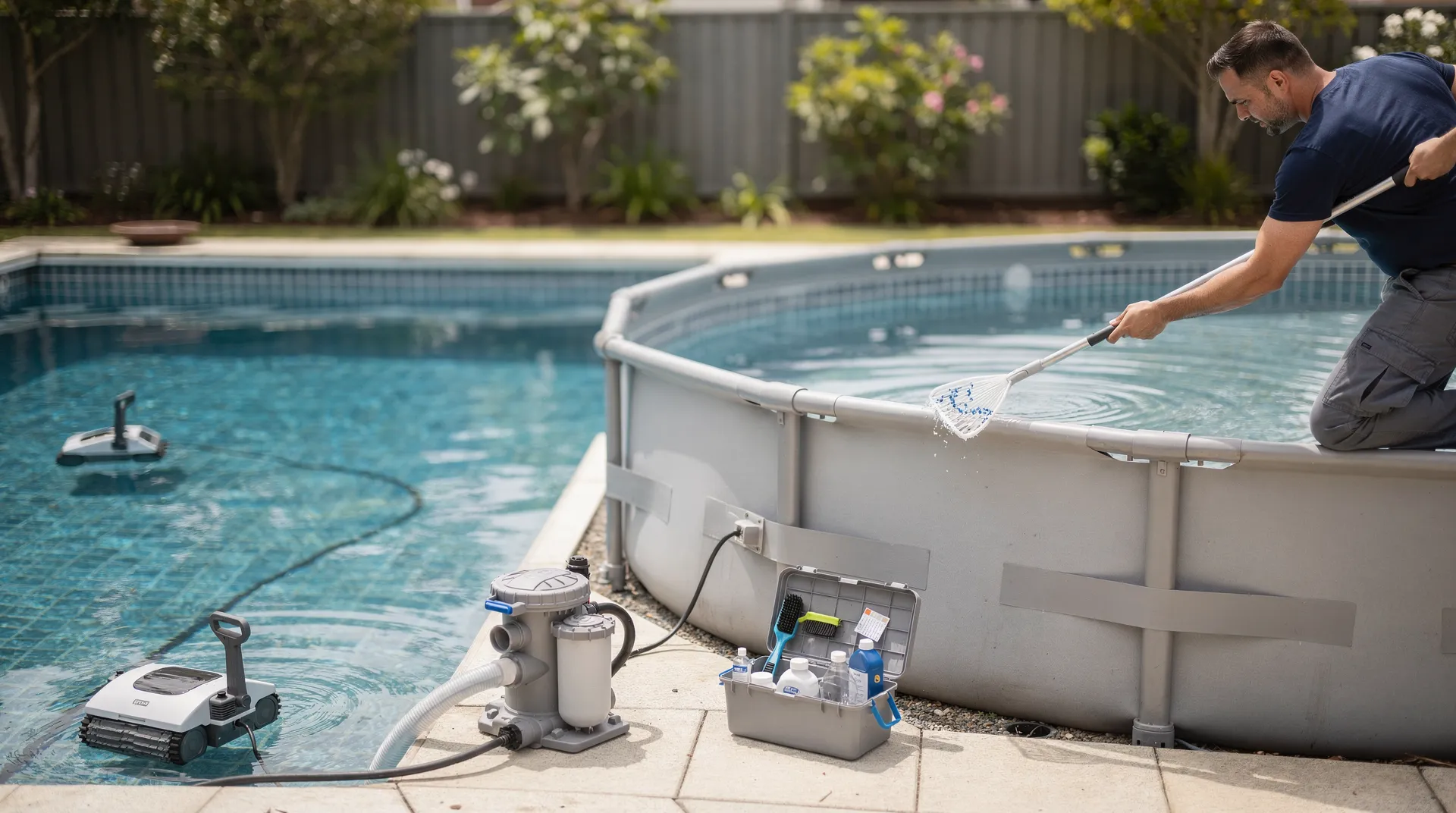
Fiberglass pools demand significantly less routine upkeep than vinyl liner pools, primarily because of surface composition. The non-porous gel-coat surface of a fiberglass pool resists algae colonization, reducing the frequency of chemical treatments and manual scrubbing that other pool types require.
Why Does Pool Surface Material Affect Cleaning Effort?
A fiberglass pool’s gel-coat surface actively discourages algae from taking hold. Because the surface is non-porous, contaminants have fewer microscopic entry points, which supports consistently clean, clear water with less intervention. Vinyl liner surfaces, by contrast, are more susceptible to algae accumulation, meaning homeowners typically invest more time. Chemical product to maintain comparable water quality.
How Often Do Vinyl Liner Pools Require Replacement or Repair?
Vinyl liner pools require periodic liner replacement over the life of the pool — an ongoing cost and disruption that fiberglass pool owners avoid entirely. Liners are vulnerable to punctures, tears, and UV degradation, each of which demands prompt attention to prevent water loss and structural issues beneath the liner.
The practical maintenance differences between the two pool types break down as follows:
|
Maintenance Factor |
Fiberglass Pool |
Vinyl Liner Pool |
|
Algae resistance |
High — gel-coat surface resists growth |
Lower — surface more susceptible |
|
Chemical demand |
Reduced due to non-porous surface |
Higher to compensate for surface porosity |
|
Scrubbing frequency |
Less frequent |
More frequent |
|
Liner replacement |
Not applicable |
Required periodically |
Santarossa Group prioritizes material quality and long-term durability across every pool installation. That commitment directly translates into lower ongoing maintenance burdens for homeowners. A practical advantage that compounds in value over the full lifespan of the pool.

What Are the Real Long-Term Costs Involved?
Vinyl inground pools carry installation costs that vary depending on size, shape, and special features. That wide spread makes upfront budgeting a critical step — homeowners who skip detailed cost planning often face unexpected expenses mid-project.
How Does the Initial Investment Differ Between Pool Types?
Vinyl liner pools sit at the more accessible end of the pricing spectrum. Fiberglass pools, by contrast, involve a pre-formed shell that limits size and shape options. Affects both the purchase price and the long-term flexibility of the installation. Clients comparing the two pool types benefit from reviewing line-item proposals that separate excavation, materials, and finishing costs clearly.
Which Pool Type Delivers Greater Value Over Its Lifespan?
Fiberglass vs. vinyl longevity and maintenance comparisons — or, put another way, questions like how do vinyl inground pools compare to fiberglass pools in terms of longevity and maintenance — often focus on upfront price alone — a costly mistake. Over the full lifespan of a pool, vinyl pools offer greater customization potential than fiberglass, allowing owners to modify shape, depth, and interior finishes as needs evolve. That adaptability translates into long-term value that a fixed fiberglass shell cannot match.
Key cost factors homeowners should evaluate before choosing a pool type:
-
Installation cost range — vinyl liner pools span a broad price window based on complexity
-
Liner replacement cycles — a recurring expense unique to vinyl installations
-
Customization flexibility — vinyl accommodates design changes; fiberglass does not
-
Long-term durability — material quality directly affects maintenance frequency
Santarossa Group addresses this complexity through transparent, itemized proposals that break down both upfront and ongoing costs. Clients receive a clear picture of total investment. Not just the number on the first page — before any commitment is made.
How Do Customization Options Compare Between Types?
Vinyl liner pools offer significantly broader customization than fiberglass pools, particularly in shape, size, and overall footprint. Fiberglass pools arrive at a property as pre-formed, single-unit shells, which means available shapes and dimensions are fixed by the manufacturer’s mold catalog.
Can Homeowners Get a Larger Pool With Vinyl?
Vinyl liner pools accommodate larger configurations that fiberglass shells typically cannot match. A 20×40 footprint, for example, is a realistic option with vinyl construction. A size that would be difficult or impossible to source in a pre-formed fiberglass unit. Homeowners prioritizing a generous swim area or a specific custom shape find vinyl liner construction far more accommodating.
Does Fiberglass Limit Design Flexibility?
Fiberglass pools are manufactured off-site and delivered as finished shells. The range of available shapes is determined entirely by what the manufacturer produces. Clients who want an unconventional layout, a non-standard depth profile. A footprint tailored to an irregular yard face real constraints with fiberglass. Vinyl liner construction, by contrast, allows the pool’s dimensions. Shape to be designed around the property rather than the other way around.
|
Feature |
Fiberglass Pool |
Vinyl Liner Pool |
|
Shape flexibility |
Limited to manufacturer molds |
Highly customizable |
|
Size range |
Restricted by pre-formed shell |
Larger formats available |
|
On-site design input |
Minimal |
Significant |
Santarossa Group begins every pool project with a complimentary site evaluation to assess yard constraints, utility connections. Design possibilities before recommending a pool type. That first conversation ensures clients understand exactly which options fit their property — and which do not.
Which Pool Type Is Right for Windsor Homeowners?
Windsor and Essex County homeowners choosing between a vinyl inground pool and a fiberglass pool benefit most from working with a contractor who understands local site conditions, zoning rules, and inspection requirements. Santarossa Group’s deep familiarity with Windsor-area permitting and inspections keeps pool projects on schedule and free from costly rework.
Does Local Permitting Knowledge Really Affect a Pool Project?
Permit delays are one of the most common reasons pool installations run over schedule. Santarossa Group’s knowledge of Windsor and Essex County zoning requirements removes that risk before excavation begins. Clients receive accurate timelines because the permitting process is managed from the start, not addressed after problems arise.
What Does End-to-End Pool Service Include?
Santarossa Group manages every phase of a pool installation under one roof. Clients work with a single point of contact from the initial site evaluation through design input, permitting assistance, construction, finishing, and aftercare. That continuity eliminates the coordination gaps that arise when homeowners juggle multiple contractors.
The practical advantages of this approach include:
-
Site evaluation to assess soil conditions, utility connections, and layout options
-
Design input to match the pool type and finish to the property
-
Permitting assistance to satisfy Windsor and Essex County requirements
-
Construction and finishing managed by a consistent, accountable team
-
Aftercare to support clients once the project is complete
Homeowners ready to move forward can request a quote online. Those who already hold architectural drawings may submit them directly to Santarossa Group for review.
Choosing between a vinyl and fiberglass pool ultimately comes down to balancing upfront investment against long-term maintenance commitments, durability expectations. The specific conditions of your property. Both options deliver genuine enjoyment and lasting value when installed with quality materials and sound workmanship. Understanding the distinctions covered here equips homeowners to enter that conversation with confidence, ensuring the decision aligns with their lifestyle, budget. Long-term goals for their outdoor living space.
FAQ
How long does a vinyl pool liner last before it needs replacing?
Vinyl pool liners require replacement every 8 to 12 years under normal conditions. Heavy use, sharp objects, and chemical imbalances shorten that interval further.
Does a fiberglass pool require liner replacement over time?
Fiberglass pools arrive as single-unit structures and never require liner replacement. This eliminates the recurring replacement costs that vinyl liner pools introduce throughout their lifespan.
Why does a fiberglass pool demand less cleaning than a vinyl pool?
The smooth, non-porous gel-coat surface of a fiberglass pool resists algae growth, reducing the frequency of chemical treatments. Manual scrubbing required to keep the water balanced.