Best Concrete Driveway Designs for Stunning Homes: Modern Styles, Patterns, and Local Insights
Driveways are often the first thing people notice about a home — they need to look good and stand up to years of use. This guide walks through the most popular concrete driveway solutions — stamped, exposed aggregate, coloured, polished and broom finishes — and ties each option to Windsor and Essex County home styles, maintenance realities, and local cost considerations. Whether you want maximum curb appeal, long life with low upkeep, or a particular look to match your house, we explain which finishes deliver and why. You’ll learn about signature local patterns, modern geometric approaches, decorative accents like brick borders and inlays, a practical Windsor cost guide, the installation sequence, and finish-specific care tips. We also highlight local items that matter — permits, drainage, and how an experienced local contractor smooths the process. By the end, you’ll have design ideas matched to home types, realistic budgets, and a simple maintenance plan to protect your investment.
What Are the Top Concrete Driveway Designs to Enhance Your Home’s Curb Appeal?
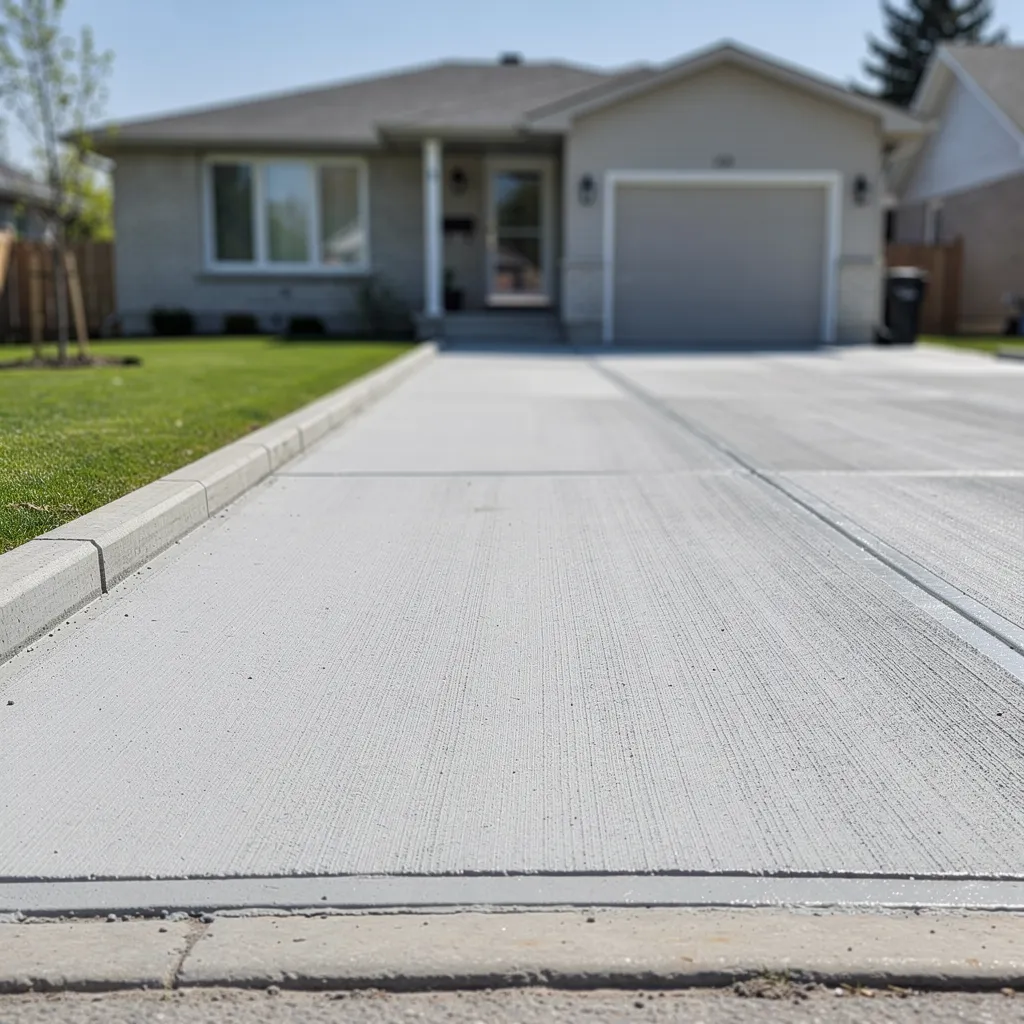
Concrete driveways come in a variety of decorative and functional finishes that change texture, colour and pattern to suit a home’s architecture and performance needs. Common choices include stamped concrete for patterned surfaces, exposed aggregate for textured depth, coloured mixes or stains for consistent tones, polished concrete for a sleek reflective look, and broom finishes for reliable slip resistance. Each approach alters the top layer or exposes different aggregates, producing distinct appearances and maintenance needs. The best option depends on your house style, Windsor-area climate, safety priorities and budget — locally, homeowners tend to favour balanced blends of texture and colour that suit traditional and modern neighbourhoods alike.
|
Design Type |
Key Attributes |
Best For (home styles)/Value |
|
Stamped Concrete |
Patterned surface that mimics stone, brick or wood |
Heritage and transitional homes seeking classic texture |
|
Exposed Aggregate |
Visible stone with tactile texture and strong grip |
Modern and contemporary homes needing durability and traction |
|
Colored Concrete |
Integral pigments or surface stains for consistent colour |
Craftsman and Mediterranean palettes that require lasting hue |
|
Polished Concrete |
Smooth, reflective finish with a modern sheen |
Contemporary and minimalist homes emphasising sleekness |
|
Broom Finish |
Fine textured surface created with a broom pull |
Functional suburban homes prioritising safety and low cost |
Each choice has trade-offs: stamped concrete gives pattern flexibility but needs more frequent resealing, while exposed aggregate hides dirt and offers excellent grip. Next we look at the stamped patterns Windsor and Essex homeowners favour and why they remain popular.
Which Stamped Concrete Driveway Patterns Are Most Popular in Windsor and Essex County?
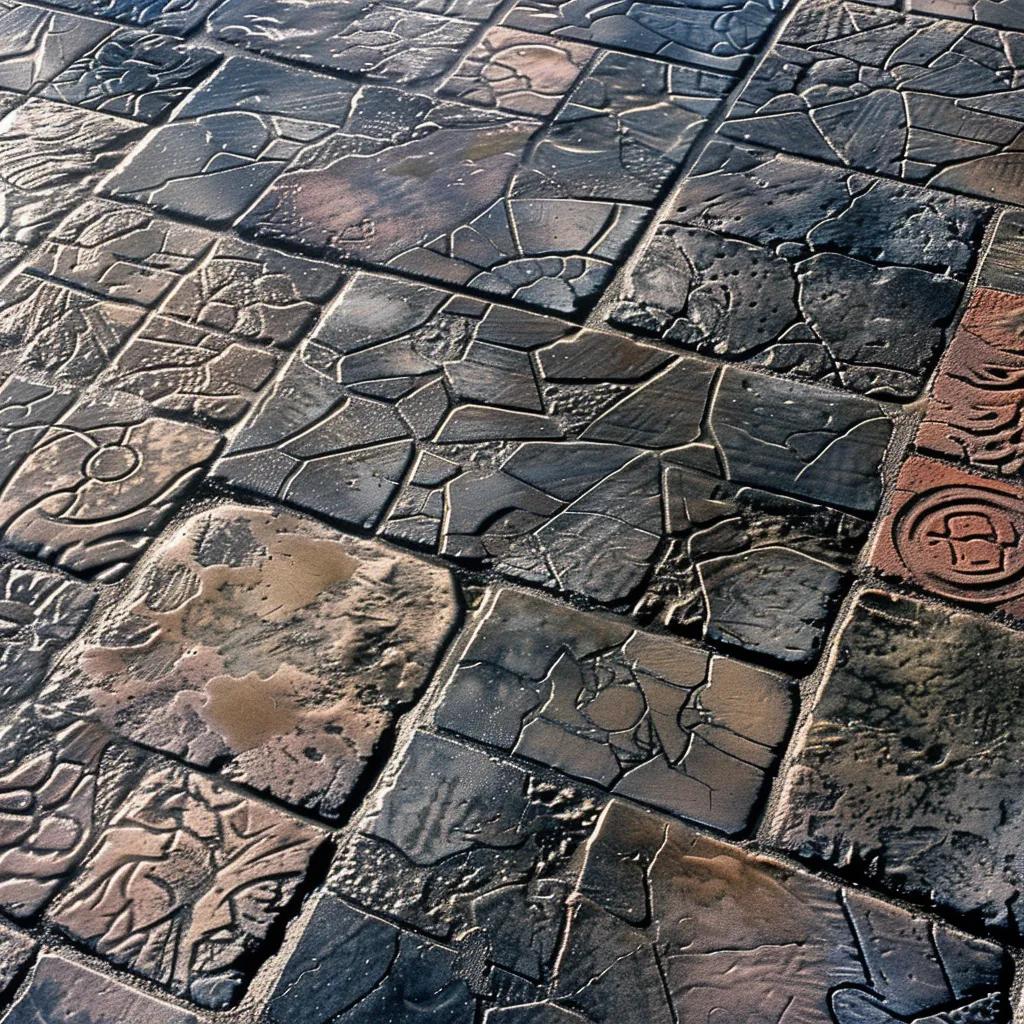
Stamped concrete reproduces natural materials by pressing moulds into fresh concrete, producing realistic textures such as ashlar slate, cobblestone, brick and wood plank. Locally, ashlar slate is a common choice for larger driveways because its irregular lines scale well and read like natural stone, while cobblestone and brick patterns suit heritage and century homes for a period-correct look. Stamped surfaces benefit from regular resealing to protect pigments and texture from Windsor’s freeze-thaw cycles and UV exposure. When pairing patterns with architecture, think about driveway scale, street sightlines and pattern repetition to keep the visual effect balanced rather than busy.
Those stamped options naturally lead into exposed aggregate finishes, which offer a very different aesthetic and functional profile.
How Do Exposed Aggregate Driveways Add Texture and Style to Modern Homes?
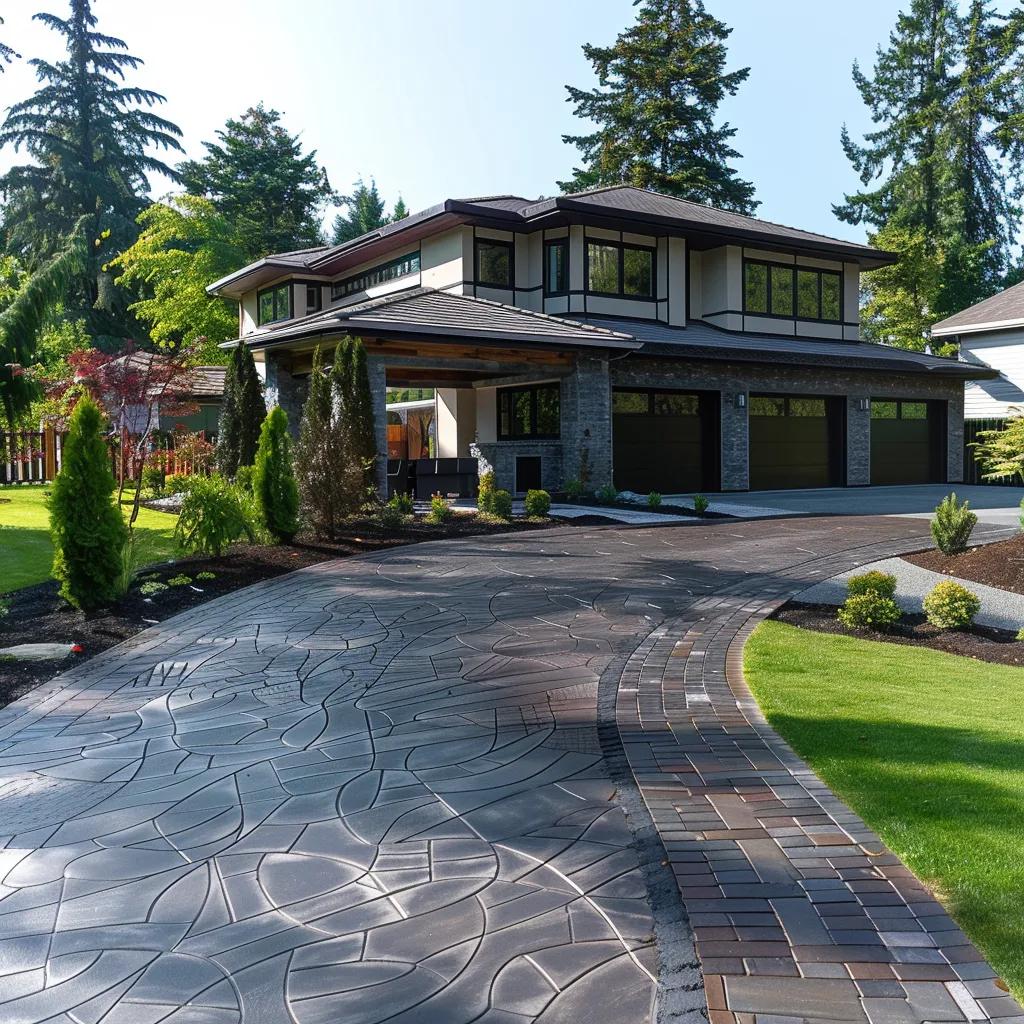
Exposed aggregate reveals pea gravel, crushed stone or river rock to create a tactile, high-traction surface that pairs well with modern materials like metal and glass. Installers remove the top paste after initial curing to show the chosen stones, creating a long-wearing finish that resists skidding and hides tyre marks. Aggregate choices — river rock for a smoother look or crushed stone for sharper texture — change both the visual tone and the underfoot feel, so you can tune the driveway to a minimalist or natural landscape scheme. Exposed aggregate also works well with linear plantings and low-profile LED lighting to highlight texture at night while cutting down on routine sweeping.
How Can Modern Concrete Driveway Designs Transform Your Home’s Exterior?
Contemporary driveway design uses geometry, negative space and integrated landscaping to create a clean exterior that complements your home and lifts perceived value. Breaking a large surface into modular slabs, adding grass or gravel strips for permeability, and using crisp saw-cut joints produces a look that fits mid-century modern and contemporary homes. Polished, minimalist finishes reflect light and visually enlarge an entrance, while narrow joints and planned repair zones make future maintenance straightforward. Thoughtful lighting, proper drainage and smooth transitions into planting beds further enhance curb appeal and manage stormwater — details that resonate in newer Windsor neighbourhoods.
Here are practical approaches homeowners use to modernize driveways while keeping maintenance and permeability under control.
-
Modular Slabs with Grass Strips: Defined concrete panels separated by planted strips soften hard surfaces and improve permeability.
-
Linear Saw-Cut Patterns: Precise joints form modern grids and make targeted repairs easier.
-
Monolithic Minimalist Finish: Large, unbroken polished panels deliver a high-end, gallery-like entry.
These options balance restraint and function — they simplify resurfacing, improve drainage and pair naturally with polished concrete in modern settings.
What Are the Benefits of Geometric and Minimalist Concrete Driveway Patterns?
Geometric and minimalist patterns focus on proportion and repetition to create a calm, architectural driveway that suits contemporary homes. Segmented slabs let you repair a single panel rather than replace an entire drive, and thin grass or gravel joints increase permeability and reduce runoff. Visually, clean lines make areas feel larger and complement minimalist facades, with generally lower decorative upkeep than ornate finishes. The trade-off is precision in layout and slightly higher initial layout costs, but long-term upkeep tends to be lower and repairs more targeted.
Why Choose Polished Concrete Finishes for Sleek, Reflective Driveways?
Polished concrete is achieved by mechanically grinding the surface and applying densifiers to produce a low-porosity, reflective finish that resists staining and is easy to clean. It works well with contemporary homes because it creates a near-seamless, showroom-like surface that shows landscaping and lighting to advantage and produces less dust than porous options. Because polished concrete can be slick when wet, specify a honed finish or add micro-texture to improve traction for Windsor weather. Maintenance is straightforward — occasional neutral cleaning and periodic topical protection — making polished concrete a smart long-term choice for a modern, low-maintenance entry.
What Decorative Concrete Driveway Options Are Available for Stunning Home Designs?
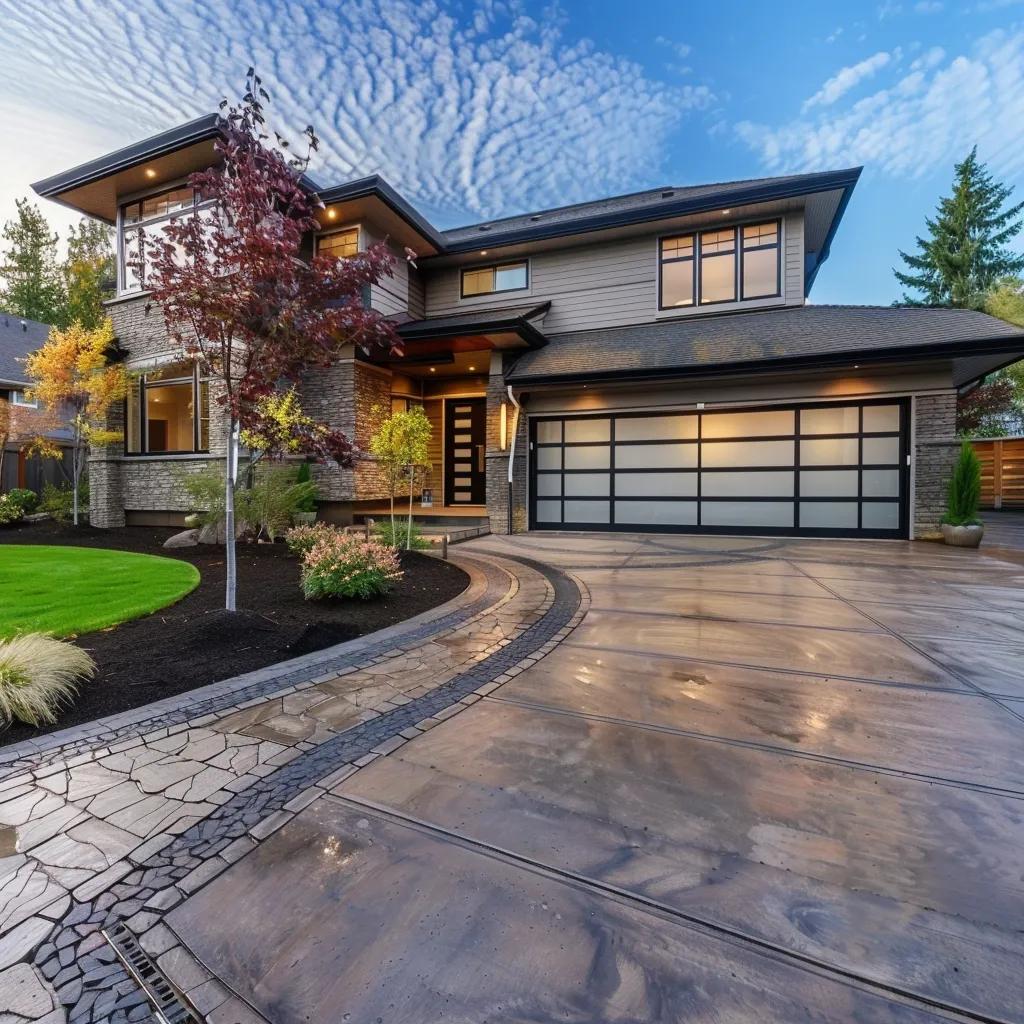
Decorative techniques move beyond texture to include integral colour, surface stains, brick borders and custom inlays that frame the entrance and tie the driveway into the rest of the hardscape. Integral colour is mixed into the batch for consistent tones, while stains create variegated effects. Brick or paver borders and custom inlays define thresholds and create a handcrafted feel when coordinated with patios or retaining walls. When choosing decorative elements, balance permanence, UV resistance and maintenance frequency — many finishes benefit from periodic resealing to preserve colour and protect inlays.
Common decorative techniques homeowners use to personalise their driveways include:
-
Integral Color: Pigment blended into the concrete for uniform, long-lasting hue.
-
Acid or Water-Based Stains: Surface treatments that create layered, variegated tones.
-
Brick Borders and Pavers: Contrasting edges that frame the driveway and match surrounding hardscape.
-
Custom Inlays: Inserted medallions or motifs that accent entrances and add curb appeal.
These strategies help you choose palettes and border materials that harmonize with Windsor and Essex home styles while standing up to seasonal conditions.
How Do Colored Concrete and Stains Customize Driveway Appearance?
Colour options include integral pigments mixed during batching, colour hardeners applied at finishing, and stains that chemically interact with cured concrete to create depth. Integral colour resists wear because it’s through-and-through; stains give a mottled look suited to rustic or Mediterranean palettes. UV resistance, sealer compatibility and local climate exposure determine how often you’ll need maintenance — Windsor summers and winter salts favour pigments and sealers rated for freeze-thaw cycles. Always review colour samples on-site in natural light to see how tones read against brick, siding and landscaping.
What Role Do Brick Borders and Custom Inlays Play in Driveway Design?
Brick borders and inlays act as architectural punctuation — they frame the drive, create focal points at gates or entrances, and tie the surface into adjacent patios and walkways. Borders can be recessed slightly to protect the main slab from vehicle overhang, and well-placed inlays like medallions or address panels add perceived value through custom detail. Material choices — clay brick, porcelain pavers or cut stone — influence maintenance and thermal movement, so joints and bedding must be specified correctly at installation. Thoughtful border design can also reduce visible cracking by controlling load distribution and giving the slab defined expansion boundaries.
How Much Does a Concrete Driveway Cost in Windsor Ontario and What Factors Affect Pricing?
Driveway costs in Windsor and Essex County vary with finish, site conditions and regulatory requirements. Simple broom-finished drives sit at the lower end, while stamped, coloured and polished finishes increase material and labour time and raise per-square-foot prices. Key cost drivers include driveway size, excavation and sub-base work, drainage solutions, buried utilities and any municipal permits or inspections required locally. For an accurate budget, get an on-site estimate that accounts for slope, soil conditions and code constraints — these site-specific factors can materially change final bids.
|
Finish Type |
Typical Price Range (per sq ft) |
Typical Additional Costs (prep/permits) |
Longevity/Maintenance Notes |
|
Broom Finish |
Lower range |
Excavation, base compaction |
Low maintenance; reseal every 5–7 years |
|
Stamped Concrete |
Mid-high range |
Colour, stamping moulds, resealing |
Attractive but needs more frequent resealing |
|
Exposed Aggregate |
Mid range |
Aggregate selection, surface washing |
High traction; hides stains well |
|
Polished Concrete |
High range |
Grinding, densifiers, topical coats |
Durable; occasional topical care |
|
Colored/Stained |
Mid-high range |
Pigments or stains, UV-rated sealer |
Colour retention depends on sealer |
This pricing overview shows how finish choice affects both upfront investment and long-term upkeep. Ask contractors for clear, line‑item quotes and how they handle local permits so there are no surprises from municipal inspections or drainage adjustments.
What Are Typical Price Ranges for Different Concrete Driveway Finishes?
Typical price ranges reflect finish complexity and labour: broom finishes are most economical, while polished surfaces and detailed stamped patterns command higher per-square-foot rates. When planning a budget, consider minimum project charges for small drives, mobilization fees and any reinforcement needed for heavier vehicles. Local labour, aggregate sourcing and winter-proof base preparation in Windsor often influence quotes more than raw material costs. Request itemized bids separating base work, reinforcement, finishing and sealing to compare offers fairly.
How Do Size, Site Preparation, and Local Regulations Influence Driveway Costs?
Steep slopes, poor soils that require deeper sub-base, limited machinery access or specialized drainage increase costs because they add excavation and compaction time. Windsor and Essex County rules — setbacks, stormwater discharge requirements and permit processes — can add design and inspection steps that affect schedule and price. A contractor familiar with local rules reduces the chance of expensive rework. Ask installers about permit timelines, required drainage documentation and how they demonstrate compliance — proactive planning usually saves time and money on site.
What Is the Concrete Driveway Installation Process and How Does Santarossa Group Ensure Quality?
Installing a concrete driveway follows clear stages: site evaluation, excavation and base preparation, reinforcement, forming and pouring, finishing, curing and sealing. A properly compacted base and correct drainage prevent heaving and settlement, while proper reinforcement and control joints limit cracking and spread loads. Quality checks include on-site material verification, slump and strength tests, and disciplined curing procedures to control moisture loss and strength gain. Our local experience in Windsor informs mix choices (salt-tolerant where needed) and jointing details. Santarossa Group offers end-to-end service from assessment to final touches, combining local knowledge, regulatory experience and a full range of finishes — stamped, stained, polished, broom, smooth trowel and exposed aggregate — tailored to homeowner priorities.
Below is a concise installation-step breakdown that explains what happens at each stage and why it matters.
|
Installation Step |
What Happens |
Why It Matters/Local Considerations |
|
Site Evaluation |
Assess slope, soil, utilities, permits |
Identifies prep needs and avoids compliance delays |
|
Excavation & Base |
Remove topsoil, install compacted gravel base |
Proper base prevents settlement in freeze-thaw cycles |
|
Reinforcement |
Place rebar or wire mesh per spec |
Distributes loads and controls crack widths |
|
Pouring & Finishing |
Place concrete, apply chosen finish |
Determines appearance and surface performance |
|
Curing & Sealing |
Maintain moisture and seal surface |
Ensures strength development and surface durability |
Knowing each stage helps you plan timelines, deliveries and temporary vehicle restrictions while the slab cures.
How Can Homeowners Maintain and Extend the Life of Their Concrete Driveways?
Good maintenance protects both looks and structure: sealing, cleaning, joint care and targeted drainage work vary by finish. Seasonal cleaning to remove de-icing salts, timely resealing for stamped or coloured surfaces, and quick repair of cracks limit water infiltration and freeze-thaw damage common in Windsor. A simple maintenance schedule tied to the finish helps you budget for routine care and avoid larger repairs later. Regular inspections and early fixes for drainage or joint problems preserve curb appeal and keep your driveway functional for decades.
Essential maintenance practices to adopt:
-
Regular Cleaning: Remove debris and salt residue seasonally to prevent surface degradation.
-
Scheduled Sealing: Reseal stamped or coloured surfaces every 2–5 years depending on traffic and exposure.
-
Joint and Crack Care: Maintain control joints and repair hairline cracks promptly to prevent water ingress.
These basics form a practical maintenance plan; the following sections offer finish-specific tips and preventative strategies to protect your investment.
What Are the Best Practices for Sealing and Cleaning Different Concrete Finishes?
Sealing frequency depends on finish: stamped and coloured concrete often need resealing every 2–4 years under heavy traffic or strong sun, while broom-finished and exposed aggregate surfaces can go longer between treatments. Clean with neutral pH detergents and pressure wash at manufacturer-recommended pressures to remove contaminants without damaging the surface; avoid harsh acids on stained concrete. Use sealants rated for freeze-thaw cycles and UV stability, and confirm compatibility with integrally pigmented or stained finishes to prevent discoloration. Regular cleaning followed by timely resealing keeps colour vibrant, reduces wear and extends service life.
How Can Preventative Care Reduce Cracks and Preserve Driveway Appearance?
Preventative care focuses on good drainage, joint maintenance and avoiding concentrated heavy loads that start cracks. Make sure gutters and grading move water away from the slab, keep joint fillers in good condition and avoid leaving heavy equipment parked for long periods. Seal small cracks early to stop freeze-thaw enlargement, and consider a thin overlay if surface scaling appears. A professional inspection every few years catches problems early and lets you do targeted repairs rather than full replacement.
Frequently Asked Questions
What is the lifespan of a concrete driveway?
With proper installation and maintenance, a concrete driveway typically lasts 20–30 years or more. Lifespan depends on installation quality, local climate and how well you care for it. Regular sealing, cleaning and prompt repairs reduce the risk of cracking and surface deterioration — important in Windsor’s seasonal climate.
How do I choose the right concrete driveway finish for my home?
Match the finish to your home’s architecture, the local climate and your maintenance tolerance. Stamped or coloured finishes suit traditional houses, while polished or exposed aggregate complements modern styles. Consider slip resistance, maintenance needs and budget, view samples in natural light and consult local contractors who know Windsor and Essex County trends for tailored advice.
Are there eco-friendly options for concrete driveways?
Yes. Permeable concrete lets water pass through and reduces runoff, recycled aggregates or low‑emission mixes lower environmental impact, and design choices like grass strips improve sustainability. Talk to a contractor experienced in green practices to find the best eco-friendly solution for your site.
What maintenance is required for different concrete finishes?
Maintenance varies by finish. Stamped and coloured concrete usually need resealing every 2–5 years, while broom-finished and exposed aggregate often require less frequent sealing. Routine cleaning with neutral cleaners and pressure washing preserves appearance, and prompt crack or joint repairs prevent water damage. Tailor maintenance to your chosen finish to maximise longevity.
How can I enhance the safety of my concrete driveway?
Choose finishes with good traction like broom finish or exposed aggregate, ensure proper drainage to avoid standing water, add lighting for night visibility and use contrasting borders to mark edges. Regular maintenance and prompt crack repairs also reduce tripping hazards and keep the surface safe.
What are the common mistakes to avoid when installing a concrete driveway?
Avoid inadequate site preparation, poor drainage planning and low-quality materials or rushed curing — these lead to settling, cracking and premature failure. Also account for local climate when selecting finishes. Hire experienced contractors who understand local codes and soil conditions to ensure a durable installation.
Conclusion
The right concrete driveway improves curb appeal, performs well and keeps maintenance predictable. This guide gives you the information needed to compare finishes, understand local considerations and plan for costs and upkeep. For tailored recommendations and a reliable installation, get in touch with us — we’ll help you choose a look that fits your home and stands up to Windsor-area seasons. Transform your driveway into a long-lasting, attractive entry that reflects your style and practical needs.