How to Choose the Right Concrete Driveway Contractor in Windsor & Essex County
A concrete driveway is a major investment — pick the wrong contractor and you risk premature cracking, drainage problems, or costly rework. This guide walks Windsor and Essex County homeowners through the practical checks that matter: licenses and insurance, relevant project experience, what drives cost, communication and timelines, local permit and climate considerations, and how to validate references so you can hire with confidence.
After a brief checklist overview, we outline step‑by‑step verification tips, common red flags, and local resources for transparent estimates and project support. If you prefer a nearby partner, Santarossa Group is shown as an example of a licensed, insured contractor offering end‑to‑end service and clear, itemized estimates. The sections below map directly to what to confirm about licensing and insurance, portfolio and project types, cost breakdowns and contract essentials, communication, permit and climate specifics for Windsor/Essex, and how to read references and reviews.
Why licensing and insurance matter when hiring a concrete driveway contractor
Licensing and insurance are the fundamental homeowner protections that hold a contractor accountable and protect you financially if something goes wrong. A valid licence shows the contractor meets local business and trade rules. General liability and workers’ compensation coverage protect your property and pay for injuries so you aren’t left responsible for on‑site accidents. Checking credentials reduces the risk of incomplete work, uninsured claims, or permit issues that could delay inspections or trigger fines. Below we explain the specific documents to request and how each one safeguards your project.
Which licences and insurance policies should a reliable contractor provide?

Ask to see business registration or trade licences where applicable, a current general liability insurance certificate with stated limits, and proof of workers’ compensation for on‑site crews. Request the insurer’s certificate naming your address as the worksite and note policy names, limits, and effective dates. For larger projects, ask whether the contractor is bonded or can provide a performance bond — this gives you a financial remedy if work is left unfinished. Verifying credentials directly with the issuing agency or via an insurer contact closes the loop and lowers your risk before signing a contract.
How licensing and insurance protect you during the install
These credentials protect homeowners in three clear ways: they help ensure work meets regulatory standards, they provide financial coverage for accidental damage or injury, and they create formal remedies through bonds or insured claims. For example, if a worker is injured or a neighbouring lawn is damaged during a concrete pour, liability or workers’ comp covers costs while a licence increases the likelihood repairs meet inspection standards. Before work starts, confirm certificates, check effective dates, and make insurance verification a contract condition to avoid exposure to uncovered claims.
|
Credential |
What it covers |
Why it matters |
|
Contractor licence / business registration |
Authorization to perform construction trades in the municipality |
Confirms legal standing and basic regulatory compliance |
|
General liability insurance |
Third‑party property damage and bodily injury |
Protects you from financial responsibility for accidents |
|
Workers’ compensation |
Medical and wage benefits for injured workers |
Prevents employee claims from becoming homeowner liabilities |
|
Performance bond (if applicable) |
Funds available if contractor abandons or defaults |
Provides recourse for incomplete or substandard work |
Requesting these documents before work begins avoids most common financial and legal exposures and sets clear contract expectations.
How experience and a contractor’s portfolio should influence your choice
A contractor’s portfolio and relevant experience show whether they can handle the specific challenges on your site — grading, drainage, decorative finishes, slope work, and municipal permit requirements. Look for past projects that mirror your driveway’s size, finish, and site conditions rather than relying solely on years in business.
Review project examples, ask for specifications, and confirm recent local work to get a realistic sense of capability. Contractors who can explain technical choices for similar jobs give you better predictability for your project.
How much experience is appropriate for a driveway installer?
Instead of a single years‑in‑business threshold, prioritise contractors who can show consistent, recent experience with driveway projects and provide detailed case examples. A mix of replacements, decorative finishes, and jobs that required grading or drainage demonstrates useful breadth. Look for recent Windsor/Essex projects or evidence of ongoing training — these signal familiarity with local codes and climate‑appropriate methods. A practical interview request is a project diary or a client reference from work completed in the last 12–24 months.
Which types of driveway projects belong in a contractor’s portfolio?

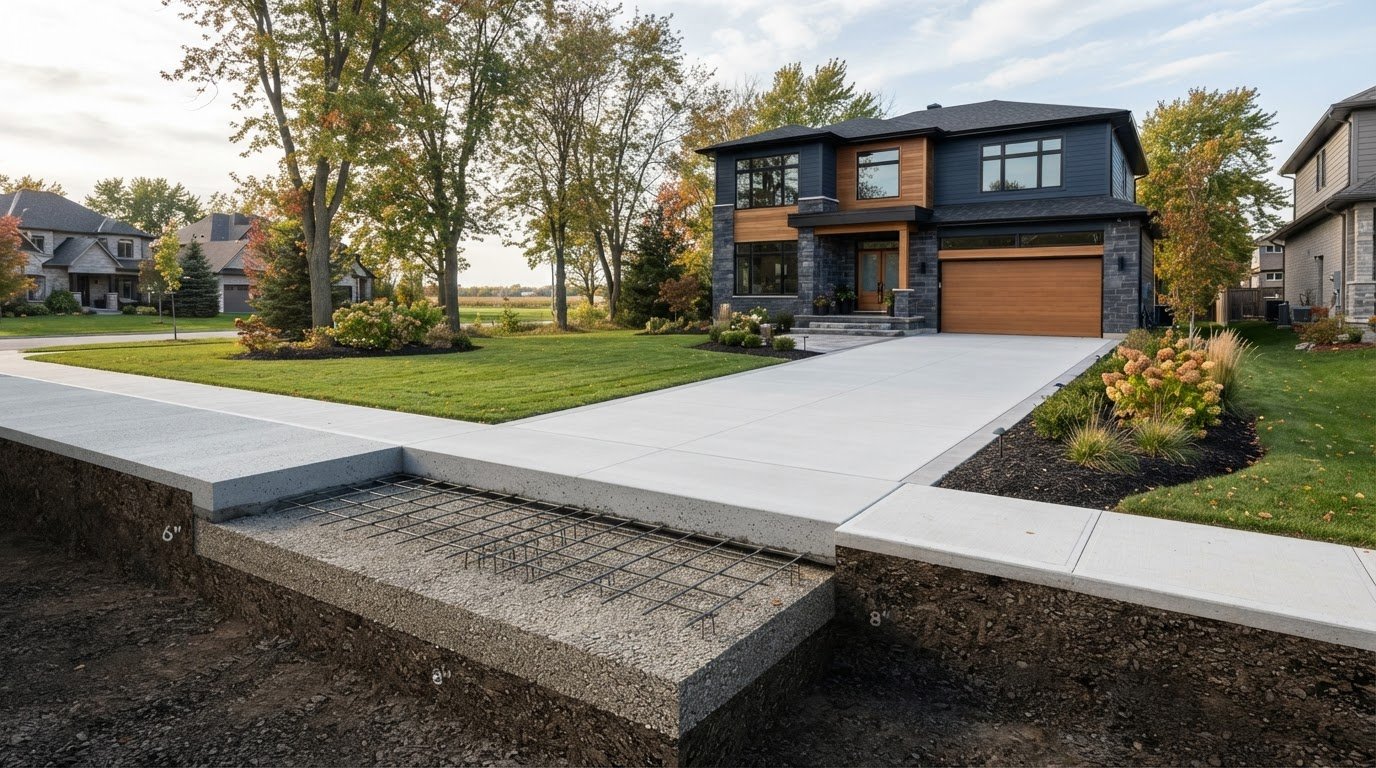
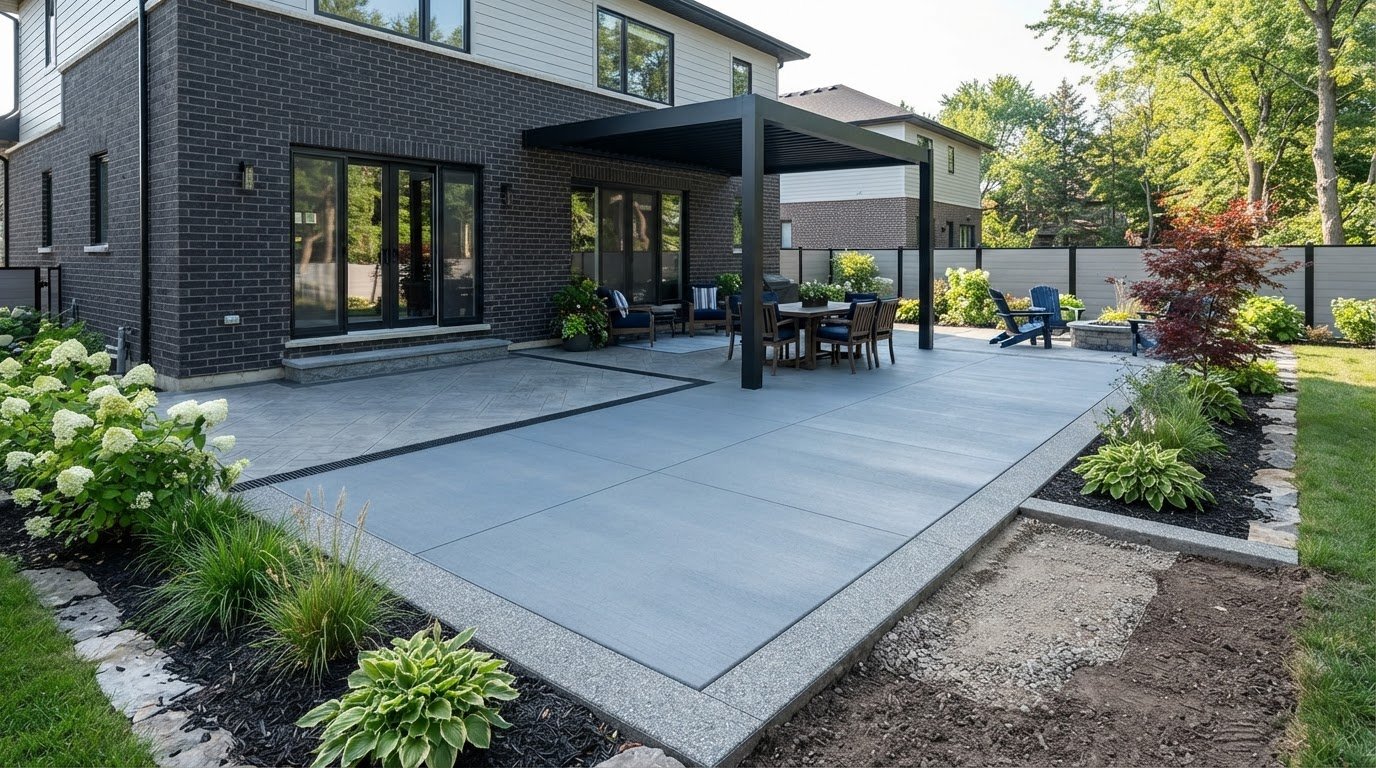
A strong portfolio includes basic broom‑finish slabs plus decorative work like stamped concrete, exposed aggregate, or polished finishes. It should also show driveways on slopes, projects with integrated drainage, and any retaining features. Each example should list scope details — slab thickness, reinforcement, finish type, and drainage solutions — along with photos, notes on site challenges, and client contacts so you can validate both aesthetics and workmanship.
|
Project type |
Scale / complexity |
What it signals |
|
Simple replacement |
Single‑car to two‑car driveways |
Competence in slab and base preparation |
|
Decorative finishes (stamped, stained, exposed aggregate) |
Medium complexity, higher finishing skill |
Skilled crews and quality control |
|
Driveway with slopes / retaining |
Complex grading and drainage |
Engineering awareness and precise subgrade work |
|
Integrated drainage or aprons |
Additional site work and municipal compliance |
Experience handling permits and inspections |
Matching your project to portfolio examples reduces the chance of surprises during construction.
Key cost factors for concrete driveway installation
Several variables drive price: project size (square footage), chosen surface finish, site preparation and base work, reinforcement and slab thickness, and permit or inspection fees. Understanding these elements helps you compare bids fairly. Transparent contractors provide itemized quotes so you can compare proposals apples‑to‑apples.
How do materials and finishes change installation costs?
Finish selection is one of the biggest cost levers. A plain broom finish uses a standard mix and faster finishing labour, while stamped, stained, or exposed aggregate finishes require more time, additives, and tooling. Additives (air entrainment, fibres), colour integrators, and higher‑strength mixes raise material costs; sealing and protective coatings add upfront expense but can lower lifetime maintenance. When comparing quotes, weigh upfront cost against long‑term maintenance and durability.
What belongs in a clear driveway quote and contract?
A full quote should itemize materials, slab thickness, reinforcement (rebar or wire mesh), base prep and disposal, finish type, sealer, permit fees, labour hours, expected start and completion windows, payment schedule, and warranty details. Contracts should spell out cleanup responsibilities, inspection obligations, and dispute‑resolution steps. Avoid vague timelines and open‑ended deposit demands. Ask for a written payment checklist tied to observable milestones (e.g., base compaction complete; concrete poured; finishing and curing underway) to keep payments aligned with progress. Some local providers also offer downloadable “Concrete Driveway Contract Checklist” tools to help compare bids objectively.
|
Cost driver |
Typical attribute |
Usual impact on price |
|
Project size (sq ft) |
Area to pour and finish |
Directly affects material and labour totals |
|
Finish type |
Broom / stamped / exposed aggregate |
Decorative finishes increase labour and tooling costs |
|
Site preparation |
Base removal, grading, drainage work |
Can add substantial cost if soils or slopes need remediation |
|
Reinforcement |
Wire mesh vs rebar vs fibre |
Rebar and thicker slabs raise material and labour costs |
|
Permits & inspections |
Municipal fees and required inspections |
Modest fixed costs but necessary for compliance |
-
Compare the five core cost drivers in every quote: size, finish, base prep, reinforcement, and permit obligations.
-
Each item affects both upfront cost and long‑term durability — a low bid that skips proper base work can be false economy.
-
Request itemized quotes that separate these drivers so you can compare scope and avoid surprise charges.
Use a transparent pricing checklist and the table above to compare bids on technical and financial terms, not just appearance.
Why communication and customer service are as important as technical skill
Good communication is a strong predictor of how smoothly a project will run — from permit applications through curing and final inspection. Clear, timely answers, written documentation, and a staged payment schedule reduce misunderstandings. Poor responsiveness often signals disorganized crews or weak project management that can cause delays. Strong contractors proactively outline timelines, curing windows, and weather contingencies, and they document change orders and warranty terms in writing. The sections that follow list screening questions and show how early problem‑solving behaviour indicates on‑site reliability.
What should you ask a driveway installer before hiring?
Ask about licensing and insurance, ask for recent project references, and request concrete mix specs (strength and air entrainment), reinforcement type and slab thickness, expected start and cure timelines, who obtains permits, warranty terms, and cleanup policies. Request written answers and sample contracts or warranties so you can compare bidders. Note how quickly and completely the contractor responds — detailed, documented answers and willingness to put commitments in the contract are good signs.
How does responsiveness indicate a contractor’s reliability?
Responsiveness during bidding usually mirrors on‑site behaviour: timely follow‑up, clear documentation of scope changes, and proactive trouble‑shooting suggest strong project management. A contractor who explains contingency plans for groundwater or grading issues shows foresight and can reduce delays. Conversely, vague answers or reluctance to document changes are red flags that raise dispute risk. Observe these behaviours during pre‑hire conversations to choose a contractor who will handle challenges professionally and keep the job on track.
-
Signs of good communication: prompt written follow‑up, clear scope documents, and a detailed project timeline.
-
Red flags: vague scope descriptions, reluctance to provide references, and pressure around deposits or payment terms.
-
Prioritizing communication quality lowers the chance of delays, disputes, and unexpected costs.
Why local knowledge and permits matter when selecting a contractor
Local knowledge matters because municipal permit rules, inspection expectations, and climate conditions shape project scope and timing. A contractor who knows Windsor and Essex County procedures can speed approvals and avoid rework. For example, Windsor’s municipal permit process may include fees and indemnity conditions — as a reference, a Windsor permit fee was $283.00 as of April 1, 2025 (confirm current fees with the municipality). Contractors who regularly handle permits and coordinate inspections reduce homeowner admin and keep work compliant. The next sections explain permit roles and how local climate affects mix design, curing, and maintenance.
What are the permit requirements in Windsor and Essex County?
Permits typically require an application, a plan showing driveway dimensions and drainage, and payment of a municipal fee. Many contractors prepare and submit permit documents on the homeowner’s behalf — confirm in writing who is responsible and whether permit fees (such as the Windsor reference fee of $283.00 as of April 1, 2025) are included in the quote or billed separately. Additional municipal conditions may apply, so ask the contractor to document permit responsibilities to avoid surprises and keep the project on schedule.
How does local climate affect concrete driveway durability and installation?
Windsor and Essex County experience freeze–thaw cycles that can attack improperly mixed or cured concrete. Best practices include using air‑entrained mixes, correct consolidation and joint placement, and adequate slope and drainage to move water away from the slab. Proper curing windows and regular sealing (typically every 2–3 years depending on finish and exposure) help preserve surface integrity and limit de‑icing chemical damage. Ask your contractor to document mix specs and curing procedures in the contract so climate‑specific steps are followed and the risk of premature scaling or cracking is reduced.
|
Local consideration |
Typical specification |
Homeowner action |
|
Permit fee (Windsor example) |
$283.00 (reference as of Apr 1, 2025) |
Confirm current municipal fee and whether the contractor includes it |
|
Freeze‑thaw protection |
Air‑entrained mix and proper joints |
Request a written mix and joint plan in the contract |
|
Drainage |
Adequate slope and swales |
Verify drainage work is included in the quote |
|
Maintenance |
Sealing every 2–3 years |
Factor maintenance into lifecycle cost comparisons |
This table connects local constraints to concrete specs and homeowner responsibilities so you can compare contractors more effectively.
How references and reviews help you pick the best contractor
References and reviews turn claims into real evidence: they reveal how a contractor handled timelines, communication, warranty follow‑through, and long‑term durability. Ask past clients targeted questions about staying within the quote, cleanup, problem resolution, and durability. Read online reviews for trends — look at recency, how the contractor responds to complaints, and consistency across platforms. The guidance below offers questions to ask references and how to interpret aggregated reviews, then points to a local option for homeowners who want a vetted estimate.
What to ask past clients about their driveway experience
Call references and ask whether the project stayed within the original quote, if the timeline met expectations, how the crew treated the property, whether any post‑install issues occurred, and how responsive the contractor was with warranty work. If possible, view the installed driveway in person and ask about the finish’s longevity and any maintenance performed. Positive references describe clear communication, timely completion, and effective issue resolution; repeated complaints about delays, unclear billing, or poor cleanup are red flags.
How to read online reviews and testimonials
Look for patterns in reviews. Consistent praise for communication, punctuality, and finish quality is a strong signal; recurring complaints about the same issue (for example, warranty responsiveness) indicate risk. Prioritise recent local reviews from Windsor/Essex County and note whether the contractor responds constructively to criticism. Cross‑check reviews against provided references and portfolio photos — consistent alignment across sources builds confidence.
-
Ask past clients about timeline adherence, post‑install issues, and warranty responsiveness to build a complete picture.
-
Read reviews for trends and contractor responses rather than isolated ratings.
-
If you want a local, transparent estimate and a checklist‑based quote comparison, Santarossa Group is available as a licensed, insured provider offering end‑to‑end service and clear, itemized estimates — consider requesting a consultation and their contract checklist to compare bids objectively.
Armed with verification questions, tables, and checklists, you can shortlist contractors, compare itemized quotes, and choose a local provider who documents licensing, insurance, permit handling, and climate‑appropriate installation methods.
Frequently Asked Questions
What should homeowners know about concrete driveway maintenance?
Regular maintenance extends a driveway’s lifespan. Plan to reseal every 2–3 years to limit moisture intrusion and surface wear. Address cracks promptly to prevent worsening, clean regularly with a mild detergent, and avoid harsh chemicals. Tailor maintenance to local freeze‑thaw conditions to keep the slab in good shape.
How can homeowners get a fair estimate from contractors?
Request itemized quotes from multiple contractors so you can compare materials, labour, and permit costs directly. Ask contractors to explain their pricing and any potential extras. Be cautious of unusually low bids that may omit essential work. Clear communication about scope and expectations helps ensure estimates are fair and complete.
What are common mistakes homeowners make when hiring a contractor?
Common mistakes include not verifying licences and insurance, skipping reference checks, and signing contracts without reading terms. Focusing only on price instead of experience and project scope is another frequent error. Do your research, ask detailed questions, and get all agreements in writing before work begins.
How important is it to discuss project timelines with your contractor?
Timelines set expectations and help avoid surprises. Ask for estimated start and completion dates and how weather or other issues will be handled. A reliable contractor provides a clear timeline and keeps you informed of changes, which helps the job run smoothly.
What should homeowners do if they encounter issues during installation?
Raise concerns immediately with the contractor and document problems in writing. If the contractor is unresponsive, refer to the contract’s dispute‑resolution steps. Keep records of all communications and agreements to support a resolution and protect your interests.
Are there specific local regulations homeowners should be aware of?
Yes — permits and inspections vary by municipality. In Windsor and Essex County, specific permit requirements and fees apply. Confirm who will obtain permits and ensure all required documentation is in order. A contractor familiar with local rules can help navigate the process and prevent delays.
Conclusion
Hiring the right concrete driveway contractor protects your investment and gives you a driveway that performs and looks great for years. Verify credentials, review relevant experience, and compare itemized quotes so you can make an informed decision. If you’d like a local, transparent estimate and guidance through the process, consider contacting Santarossa Group for a consultation and a clear, checklist‑based quote.