Explore Decorative Concrete Finish Options Near Me: Your Guide to Styles, Costs and Local Experts
Decorative concrete turns ordinary slabs into durable, attractive surfaces that boost curb appeal and stand up to local weather. This guide breaks down the practical choices—covering common finishes like stamped concrete, exposed aggregate, polished floors, stains, and broom or smooth trowel textures—with Windsor and Essex County homeowners in mind. We’ll help you weigh looks, slip resistance and upkeep so you can match a finish to a patio, driveway or pool deck. You’ll also find local cost ranges, seasonal care tips for freeze/thaw and salt exposure, and a simple path to booking an on-site evaluation. Read on for clear comparisons, quick-reference tables, checklists, and practical recommendations to plan your decorative concrete project nearby.
What Are the Most Popular Decorative Concrete Finishes Near Me?
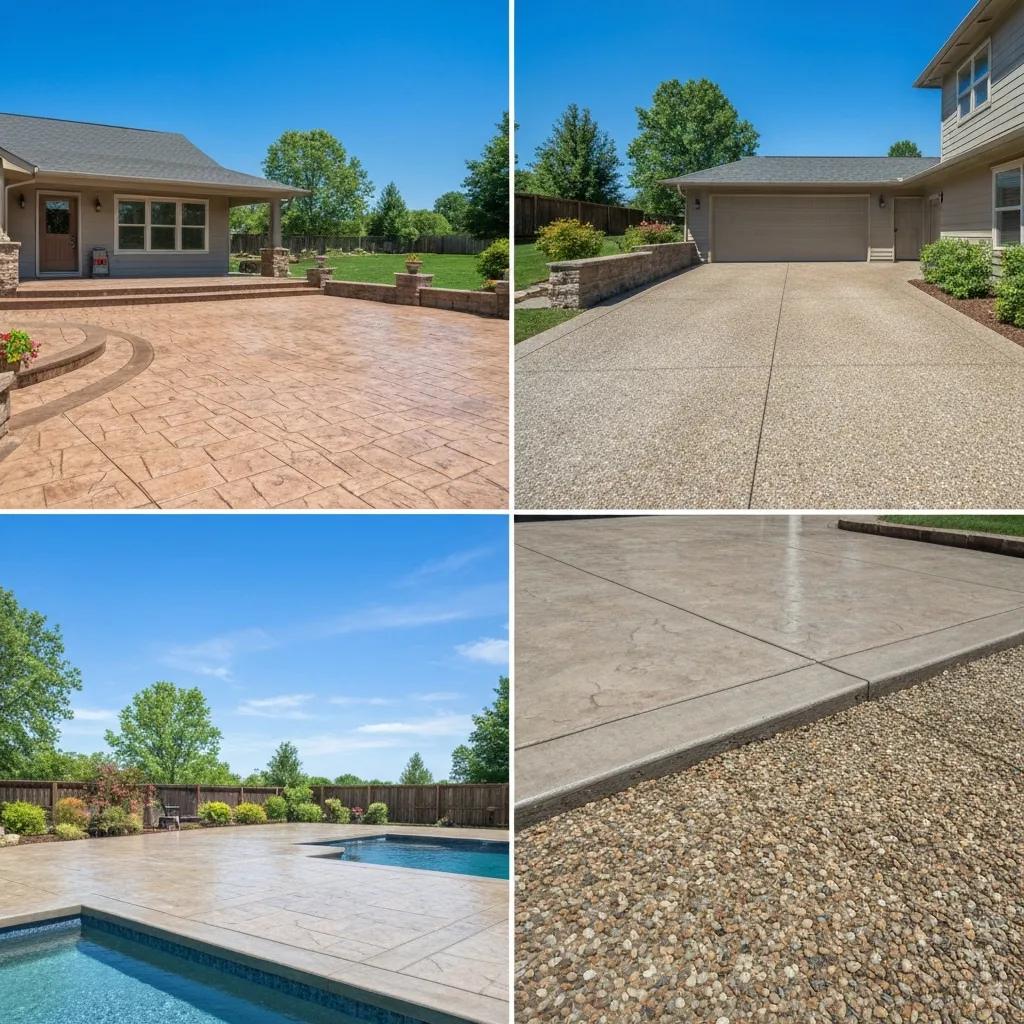
Decorative concrete comes in several popular finishes that differ in look, texture and maintenance. Each has strengths for residential use. Stamped concrete recreates stone or wood with textured impressions and color layering—great for patios and walkways when you want a refined look. Exposed aggregate reveals decorative stones at the surface, offering grip and rugged durability for driveways and pool surrounds. Polished and stained concrete work well indoors or on covered porches, giving a low-profile, long-lasting finish. Broom and smooth trowel surfaces are practical choices for driveways and garage pads where traction and simplicity matter. Knowing these options helps you trade off cost, durability and appearance when searching for “decorative concrete finish options near me.”
Below is a quick reference listing popular finishes, common uses and what each one delivers.
|
Finish |
Typical Applications |
Key Attributes |
|
Stamped Concrete |
Patios, walkways, porches |
Wide design choices; customizable patterns and colors |
|
Exposed Aggregate |
Driveways, pool decks, walkways |
Textured look, slip-resistant and durable |
|
Polished Concrete |
Interior floors, covered porches |
Low-maintenance, modern sheen, long-wearing |
|
Stained Concrete |
Patios, interior floors, decorative accents |
Rich, translucent color; cost-effective decorative option |
|
Broom / Smooth Trowel |
Driveways, garage pads, utilitarian areas |
Functional texture, economical, straightforward repairs |
This snapshot shows which finishes match common project goals. Next, we’ll take a closer look at stamped concrete and exposed aggregate so you can judge fit for your property.
What Is Stamped Concrete and How Can It Enhance My Property?
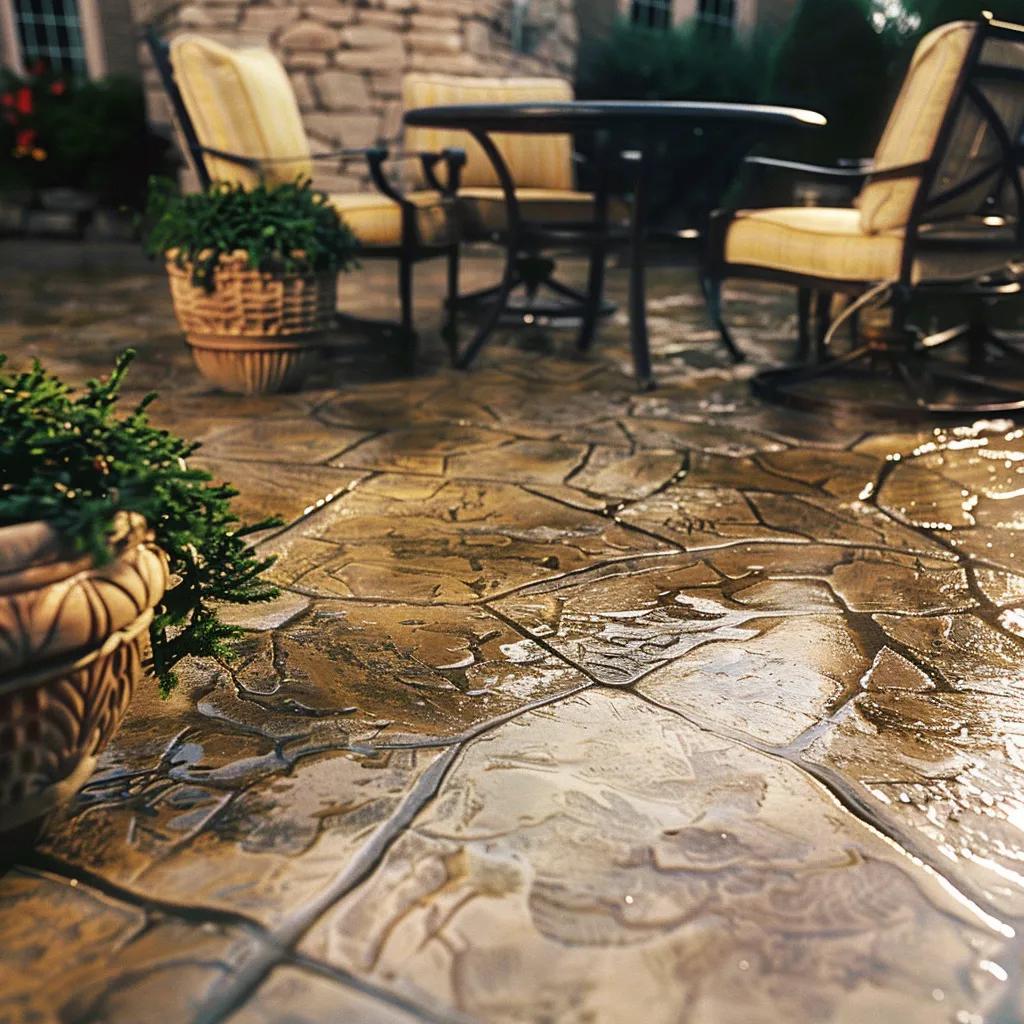
Stamped concrete is created by pressing patterned mats into fresh concrete and adding color hardeners or release agents to simulate stone, brick, slate or wood. It gives the look of premium materials at a lower installed cost and offers plenty of design flexibility through pattern choice, color blending and border details. Homeowners pick stamped concrete for patios, walkways and porches when they want a coordinated, high-end appearance without the upkeep of natural stone. Sealing helps preserve color and extend life. In Windsor and Essex County, keep in mind that more complex patterns and multi-step color applications take extra time and raise costs—but they also produce more realistic results.
Stamped concrete lets you reproduce natural materials and achieve the desired aesthetic while reducing material and installation costs compared with imported stone. If you need more texture or grip, exposed aggregate may be a better fit.
How Does Exposed Aggregate Concrete Provide Durable and Slip-Resistant Surfaces?
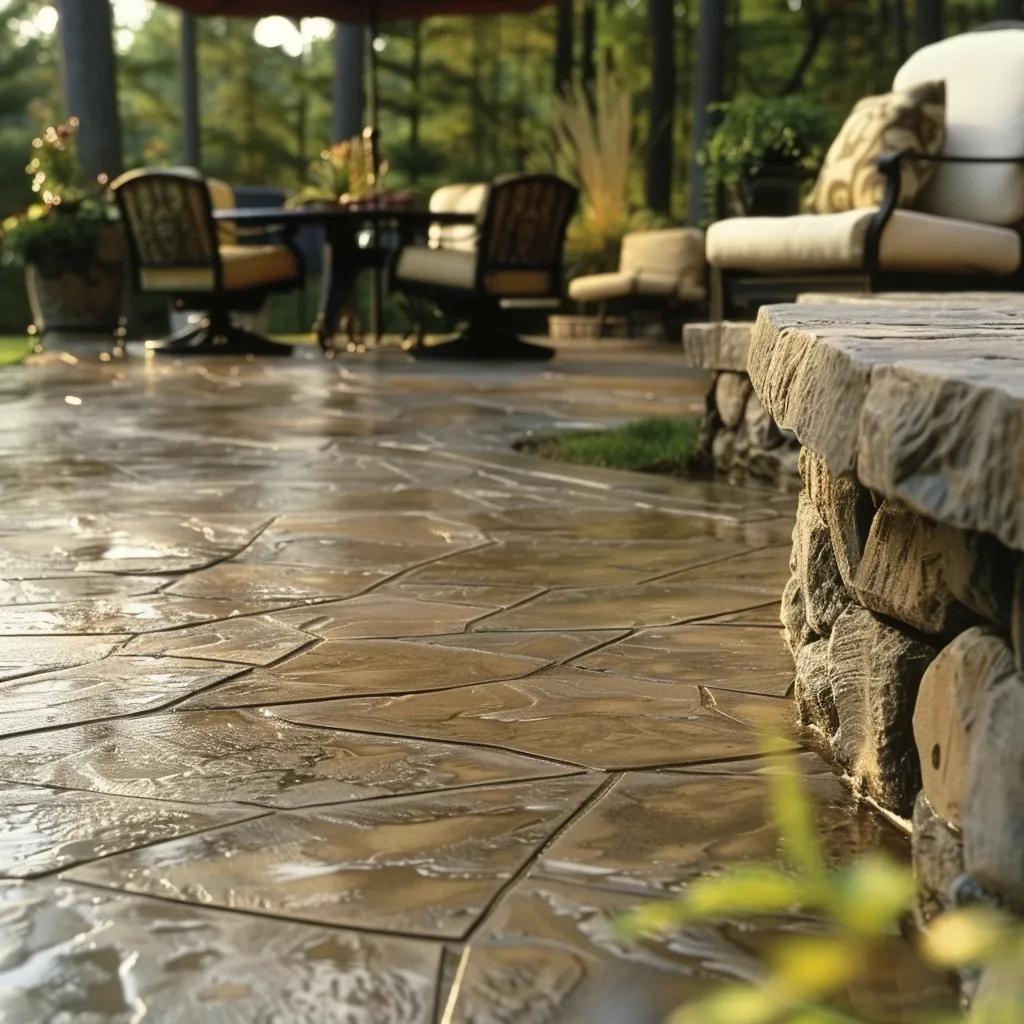
Exposed aggregate is made by removing the surface cement paste to reveal the decorative stones—granite, basalt or even colored glass—embedded in the mix. The result is a textured, non-slip surface well suited to pool decks and driveways. Aggregate selection affects both look and traction: larger angular stones add grip and wear resistance, while finer aggregates give a smoother finish. Exposed aggregate hides wear better than color-treated surfaces and stands up well to high-traffic exterior use and the freeze/thaw and de-icing salts we see locally. Proper curing and periodic sealing every few years keep appearance and cleanability in good shape.
Exposed aggregate reveals decorative stones that improve slip resistance and long-term durability in wet or busy outdoor areas. Next we’ll look at how those durability traits influence local pricing.
How Much Does Decorative Concrete Cost in Windsor and Essex County?
Decorative concrete costs vary by finish, site prep, pattern complexity and materials. Typical ranges below give homeowners realistic starting points before scheduling an on-site quote. The biggest price drivers are site access and grading, removal or repair of old slabs, reinforcement or drainage work, choice of sealer and pigments, and the complexity of stamping or polishing. Use the table below as a budgeting tool for projects in Windsor and Essex County.
|
Finish |
Typical Cost per sq ft (Range) |
Typical Project Size / Notes |
|
Stamped Concrete |
$9 – $20 |
Pattern complexity and color layering raise costs |
|
Exposed Aggregate |
$8 – $16 |
Aggregate selection and finish depth affect price |
|
Polished Concrete |
$6 – $15 |
Interior floors vary by grind level and sealer |
|
Stained Concrete |
$3 – $8 |
Economical for overlays and decorative accents |
|
Broom / Smooth Trowel |
$4 – $10 |
Lower-cost option for driveways and pads |
These ranges set baseline expectations; actual quotes will change with site prep, permits and finishing details. For many projects, an in-person evaluation is the only way to confirm precise pricing because local variables—slope correction, reinforcement or subsurface remediation—can significantly affect cost.
When budgeting, factor in these common cost drivers:
-
Site preparation and excavation, including removal of existing concrete
-
Complex patterns, multiple colors, borders or custom details
-
Surface preparation for polished floors or overlays, which can require special equipment
-
Sealing and post-installation treatments to protect against salt and UV exposure
If you want transparent pricing and a real on-site estimate, Santarossa Group offers free site evaluations and on-site quotes that include local permitting and site-specific needs. A free evaluation turns the ranges above into a reliable project budget for your property.
What Is the Typical Price Range for Stamped Concrete Near Me?
Stamped concrete pricing reflects the visual complexity and extra finishing steps needed for realistic textures. Simple single-color patterns with basic borders land near the lower end of the stamped range. Multi-tone patterns, hand-applied color layers, custom borders and inset bands add labor and materials, moving costs toward the upper end of $9–$20 per sq ft. Local conditions in Windsor and Essex County—freeze/thaw cycles and road salts—also affect recommendations for subbase and reinforcement, which raise upfront costs but reduce future maintenance. For an accurate stamped concrete quote, schedule an on-site evaluation to review grading, drainage and any slab removal.
Knowing stamped concrete pricing helps you balance design goals with budget realities. Next we compare exposed aggregate and polished finishes.
How Do Costs Vary for Exposed Aggregate and Polished Concrete Finishes?
Exposed aggregate requires extra steps to expose stones and sealing, so its cost sits in the mid-range depending on aggregate quality and preparation. Polished concrete cost depends on grind level and desired sheen. Exposed aggregate typically ranges $8–$16 per sq ft because premium aggregates or complex wash techniques take more time. Polished concrete ranges $6–$15 per sq ft depending on the number of grinding passes and protective coatings required. Choose based on desired look, slip resistance and whether the application is indoors or out: polished concrete is often best for interiors where a flat sheen and easy cleaning matter; exposed aggregate is ideal for exterior traction. Compare these drivers to prioritize appearance, function and long-term upkeep.
Which Decorative Concrete Finishes Are Best for Patios, Driveways, and Pool Decks?
Picking the right finish depends on traffic, exposure to water or salts, appearance goals and how much maintenance you want to do. Pool decks need slip resistance and comfort underfoot, so exposed aggregate or broom finishes are top picks for texture and grip. Driveways must handle vehicle weight, freeze/thaw cycles and salt—broom finish, exposed aggregate or well-sealed stamped concrete with proper subbase reinforcement are solid choices. Patios focus on aesthetics and usability; stamped or stained concrete gives the most design variety, while polished concrete suits covered patios and interior-adjacent spaces. Use the checklist below to match finishes to common areas.
Recommended finishes by application:
-
Patios: Stamped or stained concrete for design flexibility and accents.
-
Driveways: Broom finish, exposed aggregate, or reinforced stamped concrete for durability.
-
Pool Decks: Exposed aggregate or broom finish for slip resistance and quick drainage.
This mapping shows which finishes typically fit specific spaces. Next we’ll explore patio design ideas that use decorative concrete to expand outdoor living.
What Are the Best Concrete Patio Ideas Using Decorative Finishes?
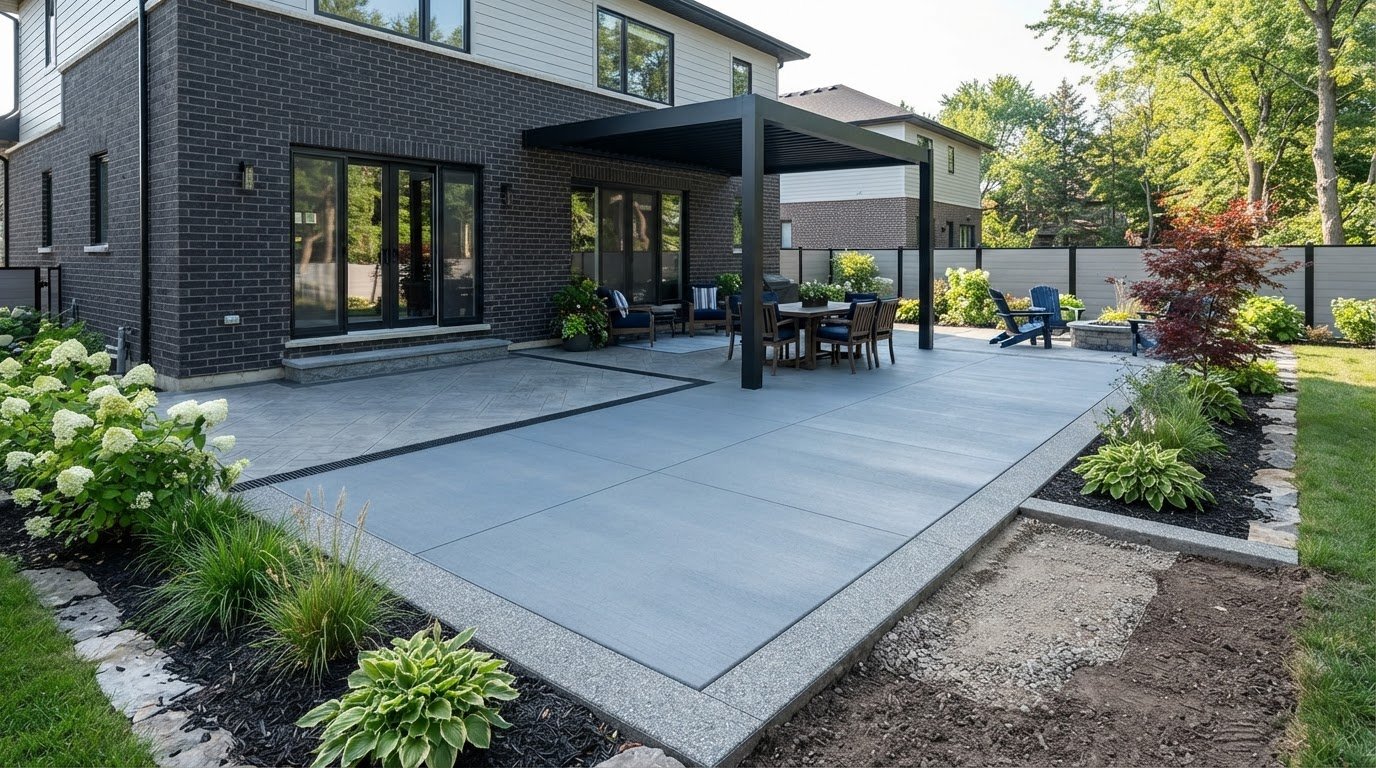
Patios are an opportunity to combine finishes and accents to create an outdoor room that complements your home and landscape. Try a stamped main area framed by a stained or smooth-trowel border to define seating and walkways, or pair exposed aggregate paths with a stamped patio for texture contrast. Colour palettes that work well here draw from warm neutrals, slate greys and earth tones that coordinate with brick or siding; choose sealers with UV protection to help pigments last. Planning accent bands, recessed joints and integrated steps gives the space a custom, finished look rather than an afterthought.
Mixing texture and color creates depth and makes outdoor spaces feel intentional and durable—use this approach when choosing finishes for driveways and pool areas discussed next.
How to Choose Durable Concrete Finishes for Driveways and Pool Areas?
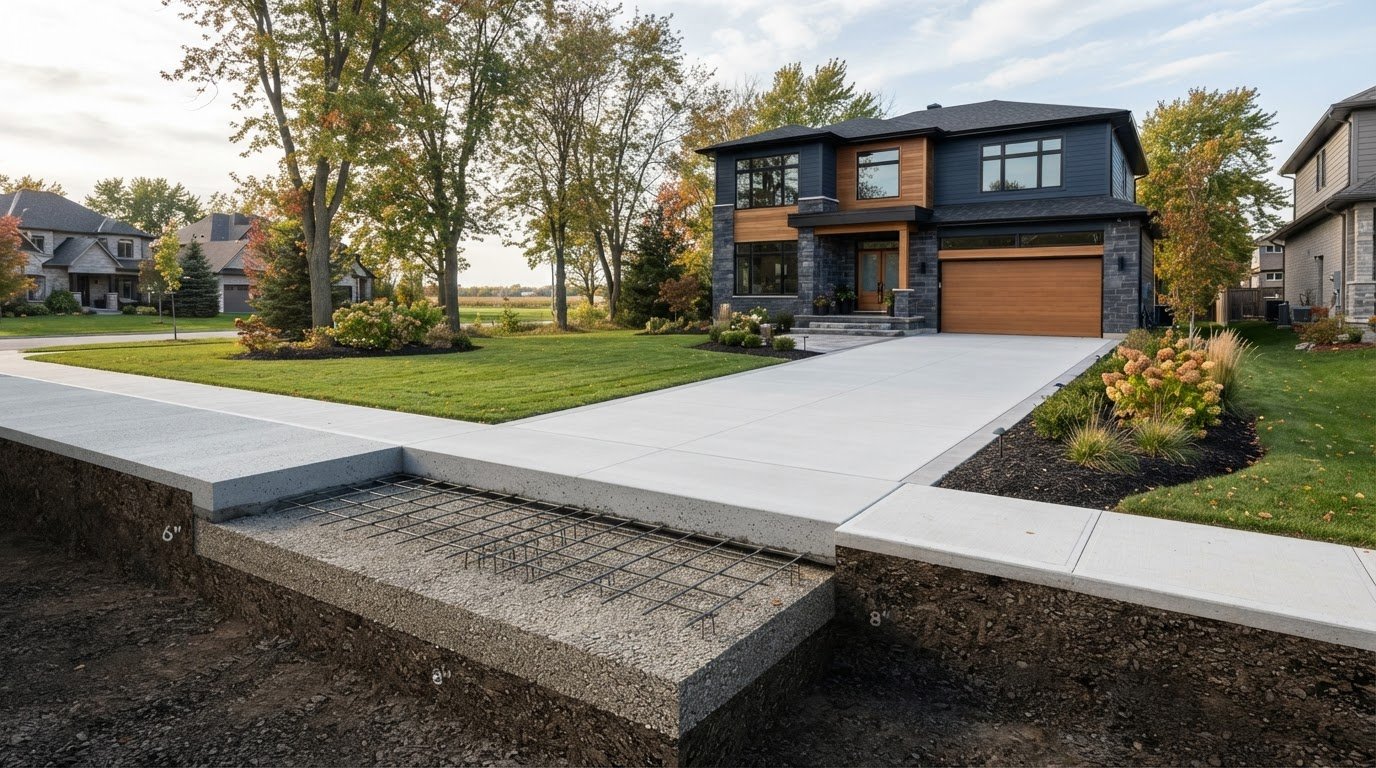
For high-traffic or wet areas, focus on load capacity, freeze/thaw resistance, slip performance and realistic maintenance demands. Driveways should use finishes that can be reinforced and sealed properly—broom finish and exposed aggregate are reliable choices, while stamped concrete needs a strong subbase and a consistent sealer program to avoid surface wear. Pool areas require texture and good drainage—exposed aggregate and broom finishes reduce slip risk and resist erosion when sealed. Use this checklist when choosing: traffic type, salt exposure, preferred maintenance frequency, and appearance priorities. Pick a finish that balances these factors for long-term performance.
Choosing the right durable finish comes down to matching function with maintenance expectations. We’ll expand on upkeep in the next section.
What Are the Benefits and Maintenance Tips for Different Decorative Concrete Finishes?
Each decorative finish mixes aesthetic value, longevity and maintenance differently. Stamped and stained surfaces show color and pattern but usually need resealing every 2–4 years depending on exposure. Polished interior floors require occasional buffing and periodic recoat to keep the sheen. Exposed aggregate and broom finishes need more frequent cleaning and regular sealing to guard against salt and staining in winter. The table below outlines recommended maintenance intervals and common products or actions to help you plan time and cost for upkeep.
|
Finish Type |
Maintenance Frequency |
Recommended Products / Actions |
|
Stamped Concrete |
Every 2–4 years |
Apply a quality acrylic or epoxy sealer; touch up color when needed |
|
Exposed Aggregate |
Every 2–3 years |
Use a penetrating sealer; power-wash to remove algae and salt residue |
|
Polished Concrete |
Annually / As needed |
Light buffing and topical sealer; refresh finish every few years |
|
Stained Concrete |
Every 2–4 years |
Reapply sealer; clean with pH-neutral products to protect colour |
|
Broom / Smooth Trowel |
Every 2–3 years |
Regular cleaning; reseal to limit salt and oil penetration |
Use these maintenance benchmarks to plan care. Decide whether you’ll handle routine work yourself or hire a maintenance service.
How Durable Are Polished and Stained Concrete Finishes in Essex County?
Polished and stained concrete make durable interior surfaces when specified and maintained correctly—ideal for climate-controlled or covered settings. Polished concrete is created through progressive grinding and densification, producing a hard surface that typically needs only light recoat or pad work for restoration. Stained concrete holds color well but depends on regular sealing to protect pigments from UV and chemicals; in Essex County the reseal interval varies with sun exposure and foot traffic. Both finishes benefit from timely cleaning, appropriate sealers and avoiding harsh deicers or cleaners that can wear protective coatings.
These durability points help you choose between low-maintenance indoor finishes and more textured outdoor options. Next we cover practical upkeep for textured outdoor finishes.
What Maintenance Is Required for Broom Finish and Exposed Aggregate Concrete?
Textured outdoor finishes need regular cleaning, stain removal and proactive sealing to stay safe and attractive through seasonal changes. Winter care is especially important where de-icing salts are used. Monthly sweeping and occasional power washing remove grit and organic growth; oil stains respond to mild degreasers—avoid acidic cleaners that damage sealers or aggregates. Sealing exposed aggregate and broom finishes every 2–3 years helps prevent salt and freeze/thaw damage and reduces the need for larger repairs later. In winter use calcium chloride products sparingly and remove salt residues in spring to protect the surface.
A seasonal maintenance checklist:
-
Sweep and rinse monthly during warm months
-
Power-wash and inspect sealer annually
-
Remove oil and organic stains with pH-neutral cleaners
-
Re-seal every 2–3 years or as wear indicates
Following this routine extends surface life and lowers lifecycle costs. If you prefer, book professional maintenance packages to keep surfaces in top shape.
Why Choose Local Experts Like Santarossa Group for Decorative Concrete Finishing?
Local knowledge matters for decorative concrete—regional climate, permits and construction practices influence installation choices and longevity. Santarossa Group brings hands-on experience serving Windsor and Essex County with end-to-end services. Santarossa Group is a local contractor based in Windsor, Ontario, specializing in concrete finishing, pool installations, home additions and more. (santarossagroup.ca)
Why work with a local, full-service contractor:
-
Local know-how helps avoid permit delays and keeps projects code-compliant.
-
End-to-end service gives you one point of accountability from assessment through final sealing.
-
A wide range of finishes lets us tailor design and performance to your site.
Choosing a nearby experienced team improves long-term performance. Below we explain how Santarossa Group’s experience translates into homeowner advantages.
How Does Santarossa Group’s Experience Benefit Homeowners in Windsor and Essex County?
Santarossa Group’s local presence and project experience bring practical benefits like accurate permitting guidance, materials specified for freeze/thaw durability, and a smooth workflow from site evaluation to final inspection. Our end-to-end approach—free site evaluations, tailored recommendations, and a range of finishes including stamped, stained, polished, broom and exposed aggregate—reduces coordination friction and centralizes quality control. We focus on durability and design to deliver finishes specified for local conditions rather than one-size-fits-all solutions.
That clarity in service and standards sets expectations for booking and project flow, described next in our step-by-step booking process.
What Is the Process for Booking a Decorative Concrete Consultation Near Me?
Booking a decorative concrete consultation is straightforward: initial inquiry, onsite evaluation, detailed quote and scheduling. Santarossa Group follows a clear process: request a free site evaluation, prepare basic site details and reference images, schedule an on-site assessment to review conditions and permitting, receive a transparent quote with recommended finishes and timelines, then confirm scheduling and start work. During the assessment we check drainage, subbase needs and any remediation required before installation. Open communication through each step ensures you understand scope, schedule and maintenance before we begin.
A simple 5-step booking checklist:
-
Request a free site evaluation and share your project goals.
-
Schedule an on-site assessment to review conditions and permits.
-
Receive a detailed, transparent quote with finish options.
-
Approve the scope and confirm the project schedule.
-
We execute the work, finish with inspection and apply the sealer.
This straightforward process moves you from idea to a completed decorative concrete surface with fewer surprises.
What Are Common Questions About Decorative Concrete Finishes?
Homeowners often ask about picking a finish, longevity, cost and how to get a reliable quote. Short, practical answers help you decide quickly. The FAQs below cover the typical concerns; for site-specific recommendations and accurate pricing, a free on-site evaluation is the best next step.
How Do I Choose the Right Decorative Concrete Finish for My Home?
Pick a finish by listing how you’ll use the space, your budget, desired look, maintenance tolerance and local climate. Prioritize slip resistance for pool areas and load capacity for driveways, then narrow finishes that meet those needs before choosing color or pattern. Budget will often determine whether you opt for complex stamping or a more economical stain or overlay. To finalize your choice, schedule an on-site evaluation to confirm subbase and drainage requirements and get tailored recommendations.
This framework links function to finish. The next FAQ compares stamped and exposed aggregate finishes.
What Are the Pros and Cons of Stamped vs. Exposed Aggregate Concrete?
Stamped concrete delivers strong visual customization and can closely mimic stone or wood, but it generally needs more sealing and careful subbase work. Exposed aggregate offers superior traction and long-term durability with a textured surface, but it can feel rougher underfoot. Stamped pros: design variety and realistic imitation; cons: higher maintenance if not sealed properly. Exposed aggregate pros: durability and grip; cons: less smooth for barefoot areas and aggregate-specific upkeep. Choose stamped for attractive patios and walkways; choose exposed aggregate for pool decks and heavy-use exteriors where traction matters most.
If you want a site-specific comparison or estimate, Santarossa Group’s free site evaluation and written quote will tailor recommendations to your property.
How Does the Santarossa Group Consultation Process Work and How Do I Request a Free Site Evaluation?
Our consultation starts when you request a free site evaluation. A technician inspects grading, drainage and any existing slabs, then offers finish recommendations, permit guidance and a clear written quote. During the visit we discuss desired looks, traffic loads and maintenance so the quote reflects real site conditions and local rules. After you approve the quote, Santarossa Group schedules installation and manages the project from site prep to final sealing and cleanup, giving you a single point of accountability. This process reduces surprises and ensures estimates include local needs like freeze/thaw protection and permits.
This FAQ explains how to secure a site-specific recommendation and sets clear expectations for the local process.
-
Key selection factors include use-case, budget, maintenance tolerance and local climate.
-
Regular maintenance and sealing schedules are essential for long life.
-
An on-site evaluation is the only accurate basis for a detailed quote.
These takeaways summarize the most actionable guidance for homeowners considering decorative concrete in Windsor and Essex County.
Frequently Asked Questions
What factors should I consider when selecting a decorative concrete finish?
Consider how the area will be used—driveway, patio or pool deck—plus traffic levels, exposure to moisture or salts, and the look you want. Think about how much maintenance you’re willing to do and local climate effects. Balancing these factors will guide you to a finish that meets both function and style.
How can I ensure the longevity of my decorative concrete finish?
Longevity comes from regular care: seal surfaces every few years, especially in freeze/thaw climates, and clean routinely to remove debris and stains. Follow manufacturer guidance and use appropriate cleaners to protect finishes and extend life.
Are there eco-friendly options for decorative concrete finishes?
Yes. Many sealers and stains are available in low-VOC formulas. You can also use recycled aggregates or industrial byproducts in mixes and source materials locally to cut transport emissions. Ask your contractor about greener choices that match your performance needs.
What are the common mistakes to avoid when installing decorative concrete?
Common pitfalls include poor site preparation, which leads to cracking and uneven slabs, and skipping proper sealing. Choosing a finish that doesn’t fit the intended use or local climate can cause premature issues. Work with experienced professionals who know local requirements to avoid these problems.
How does weather affect the installation and performance of decorative concrete?
Weather affects curing and finish quality. Hot weather can accelerate drying and cause cracking; cold slows curing. Rain or snow during installation can compromise the surface. Schedule work in favorable conditions and follow best practices for curing and sealing.
Can decorative concrete be repaired if damaged?
Yes. Small cracks and surface flaws can often be repaired or resurfaced with specialized products. Larger damage may require section replacement. Timely repairs and consistent maintenance help avoid bigger problems later.
What are the benefits of hiring a local contractor for decorative concrete projects?
Local contractors understand regional climate, permitting and construction norms. They can recommend materials suited to local conditions, often have relationships with nearby suppliers, and provide better accountability and service throughout the project.
Conclusion
Picking the right decorative concrete finish improves your property’s look while delivering the durability and function you need. This guide gives Windsor and Essex County homeowners a practical overview of finishes, costs and upkeep so you can make informed choices. For tailored recommendations and a transparent quote, request a free site evaluation with our local team. Ready to transform your outdoor spaces? Start with a free consultation and let us help you choose the right finish.