
Key qualities to look for when hiring a reliable concrete driveway contractor near you
Hiring a dependable concrete driveway contractor protects your property value, keeps future repair costs down, and delivers the look and performance you expect. This guide breaks down what “reliable” means, why specific qualifications matter, and how Windsor and Essex County homeowners can check credentials before signing a contract. You’ll find the most important experience markers, how to verify licenses and insurance, what a clear estimate and contract should include, and which materials and methods lead to lasting results. We also cover how to read reviews, local permit issues, warranty expectations, and common warning signs so you can book a confident consultation. Santarossa Group is a Windsor-based team that handles concrete finishing and full site work; we’re referenced where a local example or next step is useful.
What experience should you expect from a concrete driveway contractor?
Good driveway experience combines similar past projects, proven finishing techniques, and repeatable workmanship that reduces surprises and extends life. Look for clear examples of residential driveways, different finish types like stamped or exposed aggregate, and photos or notes that show crews understand soil prep and reinforcement. Experience matters because it usually means better subbase work, correct mix selection for local weather, and fewer on-site surprises. Below is a simple checklist to help you compare candidates, followed by how to review portfolios and why long-term practice benefits homeowners.
Key experience items to look for on a contractor’s profile:
-
Relevant project types: Proof of residential driveways and similar exterior concrete work.
-
Range of finishes: Examples of stamped, stained, exposed aggregate, broom, and smooth trowel finishes.
-
Local project history: Recent jobs in Windsor or Essex County showing familiarity with local soils and weather.
-
Technical documentation: Photos or notes showing reinforcement, control joints, and finished edges.
These points let you compare bids objectively and focus on contractors with hands-on, local driveway experience.
Why does 30+ years of concrete finishing matter?
Decades in the business usually mean institutional knowledge—teams learn how to spot and fix recurring issues. Contractors with long histories tend to be better at soil evaluation, subbase compaction, mix selection, and finishing methods suited to freeze–thaw cycles and local precipitation. They also typically run organized schedules, train crews consistently, and keep reliable supplier relationships to reduce delays. When a contractor can point to many local jobs, it gives homeowners confidence that the team understands common settlement and drainage problems in Windsor and Essex County, and that warranties and post-install support will be meaningful.
How to review a contractor’s portfolio and track record

When reviewing a portfolio, focus on recent, similar projects and evidence of construction detail—not just polished marketing shots. Ask to see work from the last two to three years that matches your driveway size and finish; photos should include before/after shots and close-ups of reinforcement, joints, and edges. Contact references and ask targeted questions about schedule, cleanup, and warranty follow-through. Keep a short checklist during the review—project date, finish type, client contact (if available), and visible reinforcement—so you can compare bidders fairly. A methodical portfolio check helps separate teams that only market finishes from those that consistently deliver them on real jobs.
How can you verify licensing, insurance, and credentials?
Checking licenses and insurance protects you from liability and confirms the contractor follows local rules. At minimum, ask for commercial general liability insurance and proof of worker compensation or provincial equivalents; verify policy dates and coverage limits are current and sufficient for construction work. Municipal registrations or permits may be required in Windsor and nearby towns—ask whether the contractor will handle permits or if that’s the homeowner’s responsibility. The checklist below makes verification straightforward and helps lower your exposure to uninsured claims or regulatory problems.
Follow this step-by-step verification checklist when evaluating credentials:
-
Request documented proof: Ask for current certificates of insurance and any municipal registrations.
-
Confirm policy details: Check coverage limits, the named insured, and policy expiration dates.
-
Call insurers if needed: If anything looks unclear, contact the insurer shown on the certificate to confirm details.
-
Include verification in the contract: Attach copies of credentials to the signed agreement.
Completing these steps before work begins turns verbal assurances into enforceable contract terms and protects your property and finances.
What licenses and insurance are normally required?
Typical paperwork includes commercial general liability insurance and proof of worker compensation coverage or provincial equivalents; some municipalities also require contractor registration or business licensing. Ask for a certificate of insurance that lists coverage amounts and confirms the policy covers concrete operations—this reduces your exposure if there’s an on-site accident or damage. Permit rules vary by town, so a contractor familiar with Windsor and Essex County should tell you which permits apply and whether permit handling is included in their service. Keep these documents on file and reference them in your contract so legal and safety obligations are clear.
How to confirm a contractor’s credentials and protect yourself
Credential checks combine document review with contractual protections. Ask for copies of insurance certificates and municipal registrations, and request written confirmation they’ll stay current through the job. Sample follow-ups include asking insurers to verify policy dates and coverage, asking the contractor how permit applications will be handled, and verifying that subcontractors carry equivalent insurance. Add a contract clause tying payment milestones to maintained insurance and permits so you have a remedy if credentials lapse during the project.
Why is clear communication and project management important?
Clear communication and strong project management prevent misunderstandings that lead to delays, added costs, and poor finishes. A contractor who provides a single point of contact, a written timeline, and a documented change-order process gives you predictable milestones and lets you plan for key activities like pours and curing windows. Good communication also helps handle weather changes, material lead times, and access needs that affect the schedule. Below are practical workflow items reputable contractors use to keep projects on track and homeowners informed.
Project-management practices to expect and request:
-
Single point of contact: A named project manager who gives regular updates.
-
Written timeline with milestones: Dates for site prep, pour, finishing, and final inspection.
-
Change-order process: A documented approval flow for scope or price changes during the job.
Putting these practices into your contract prevents ad hoc communication and makes how changes are handled clear.
How does clear communication affect your driveway project?
Good communication prevents scope creep, cuts dispute risk, and speeds resolution when site conditions differ from plans. Concrete work is timing-sensitive—late deliveries, missed weather windows, or unclear finish expectations can damage surface quality and curing. Contractors who document accepted finishes, pour windows, and site-access needs create fewer surprises and deliver results that match homeowner expectations. Regular updates about crew arrival, deliveries, and unexpected subsurface findings let you make timely decisions about contingencies. In short, communication preserves workmanship and schedule.
Which project-management practices ensure timely, quality completion?
Concrete-specific practices include scheduling for good curing conditions, organizing crew logistics to avoid last-minute shortages, and coordinating with suppliers so the specified mix arrives on time. A solid schedule will note lead times for special finishes (like stamped or stained concrete), confirm reinforcement deliveries (rebar or wire mesh), and set staged inspections. Contingency plans for bad weather—rescheduling pour days or protecting fresh concrete—should be part of the plan. When contractors share a written project checklist, homeowners have a practical tool for tracking progress and holding teams accountable.
How do customer reviews and references show contractor reliability?

Reviews and references are social proof that complement credentials; they show how contractors perform day-to-day on communication, schedule, and warranty follow-through. Genuine reviews include dates, photos, and specifics about timeliness and workmanship; references let you ask direct questions about long-term performance. Checking reviews across platforms and inspecting portfolio photos for technical detail helps separate marketing claims from real results. The table below highlights common review sources and the trust signals to watch for.
Trusted review sources and what to look for:
|
Review Source |
Trust Signal |
What to Look For |
|
Google Business Profile |
Date-stamped reviews and photos |
Prefer recent reviews that mention driveways and include images |
|
Local directories / trade sites |
Project details and response rates |
Look for replies from the contractor and verified project descriptions |
|
Contractor portfolio pages |
Before/after photos and technical close-ups |
Verify photos show reinforcement, control joints, and clean edges |
Where to find authentic reviews and testimonials
Search major local directories, contractor portfolio pages, and community social groups where homeowners share project experiences. Prioritize entries with photos, dates, and specifics about finishes or issues handled. Genuine reviews typically describe scope, how unexpected conditions were managed, and whether the contractor met timelines. Avoid reviews that are vague or duplicated across platforms—those can signal inauthentic feedback. Asking contractors for contact details of recent clients lets you collect first-hand accounts about workmanship, warranty responses, and overall service.
What should you ask past clients?
Ask past clients about schedule adherence, communication, and long-term performance—not just whether they were “happy.” Ask if the project finished on time, whether the finish matched expectations, if cracks or drainage issues developed, and how warranty claims were handled. Follow-ups should request specifics like the gap between site evaluation and pour, whether the crew left the site tidy, and whether extra costs appeared beyond the original quote. These targeted questions reveal patterns in reliability and show how a contractor treats customers after payment.
What should detailed estimates and contracts include?
A thorough estimate and contract remove ambiguity by listing work, defining materials and finishes, and setting timelines and payment milestones—essential safeguards for homeowners. A clear quote includes labour, materials, site prep, removal (if needed), permit fees, finishing type, reinforcement details, and warranty terms. Contracts should also set a payment schedule tied to milestones and document the change-order process and dispute steps. The table below helps you compare estimates and spot items that might become hidden costs.
|
Cost Component |
Typical Description |
Why It Matters |
|
Labour |
Crew time for prep, pour, finish, and cleanup |
Ensures scope is priced, not just a lump sum |
|
Materials |
Concrete mix, reinforcement, curing compounds, finish additives |
Verifies quality and match to specifications |
|
Permits & Fees |
Municipal permit costs and inspection fees |
Prevents surprise charges and legal noncompliance |
|
Site Preparation |
Excavation, subbase gravel, compaction, and removal |
Critical for longevity and prevents subsidence |
How to spot a clear, comprehensive concrete driveway quote
A good quote lists quantities, mix strength (psi), thickness, reinforcement type, finish method, and expected curing times so you can compare bids on equal terms. Vague terms like “site work” without a breakdown of excavation, gravel, or compaction are a red flag. Ask bidders to include sketches or measurements, the number of control joints, and drainage provisions—these technical items link the quote to expected performance. When quotes match in scope, evaluate value by looking at material specs and workmanship inclusions rather than price alone.
Common hidden costs to watch for
Hidden costs often come from subsurface surprises, permit requirements, drainage fixes, or unspecified removal of existing paving. Require a contingency allowance and a documented change-order procedure. Examples include unexpected rock removal, extra compaction for soft soils, or correcting grading that directs water toward the house. Contract protections can include a maximum change-order percentage before homeowner approval and staged payments tied to milestones. Make sure the contract explains how unforeseen conditions will be priced and approved to avoid disputes.
How do quality materials and techniques affect driveway longevity?
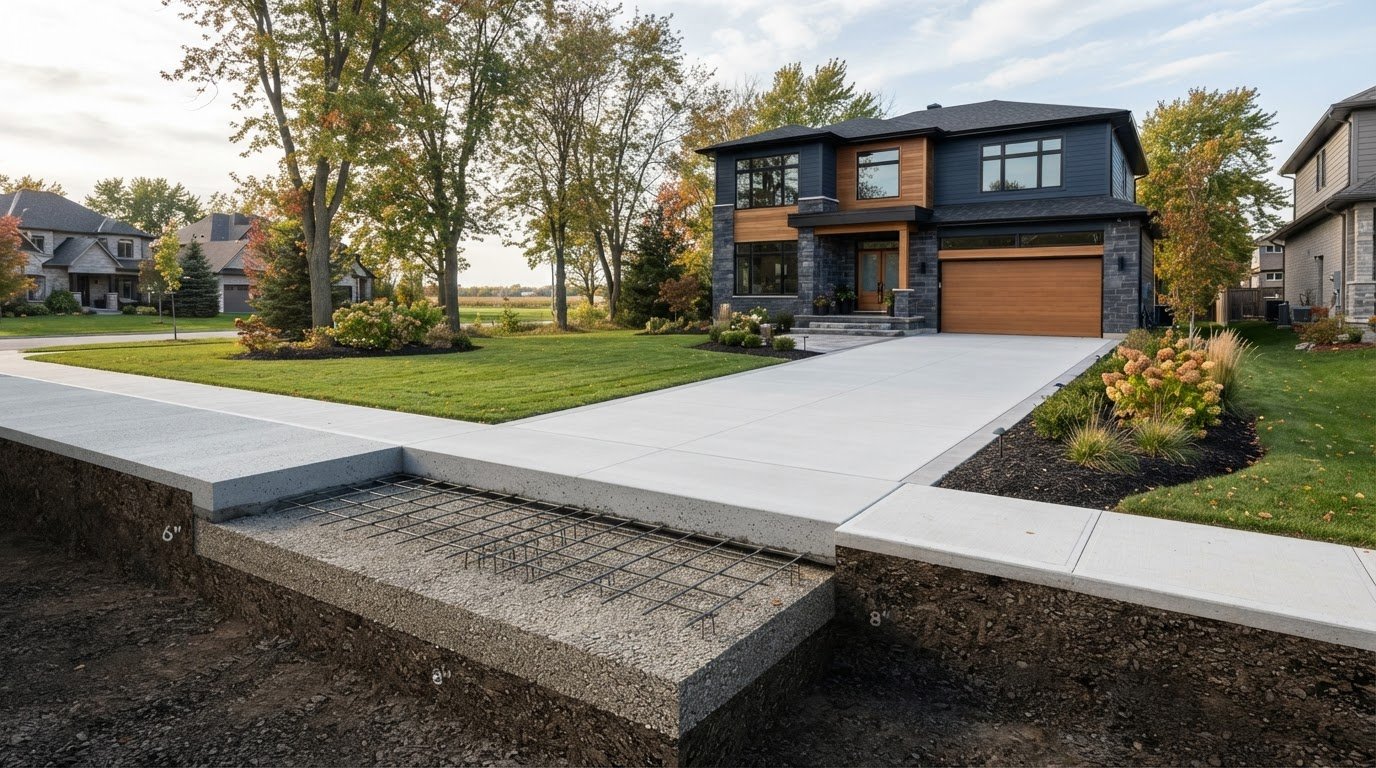
Material specs and correct techniques determine how well a driveway resists cracking, spalling, and settlement—the technical foundation of durability. Key elements include concrete mix strength, slab thickness, proper subbase prep, reinforcement, control joints, and good drainage design. Using the right mix and reinforcement combined with correct curing and jointing greatly increases lifespan and reduces maintenance. The table below lists recommended values and expected benefits for driveways in Ontario conditions.
|
Specification |
Recommended Value |
Expected Benefit |
|
Concrete mix strength |
4000–4500 psi |
Improved compressive strength and freeze-thaw resistance |
|
Slab thickness |
100–125 mm (4–5 inches) minimum for passenger vehicles |
Reduces risk of cracking and edge failure |
|
Reinforcement |
Wire mesh or rebar depending on loads |
Controls shrinkage cracks and improves structural integrity |
|
Subbase |
100–150 mm compacted gravel |
Prevents settlement and improves drainage |
Which mixes and reinforcements work best for Ontario driveways?
In Ontario’s freeze–thaw climate, a 4000–4500 psi mix with air entrainment and suitable admixtures helps resist scaling and freeze damage. Thicker slabs and correctly designed reinforcement—wire mesh for normal passenger loads, targeted rebar where needed—help control cracking and structural stress. Proper subbase compaction and drainage planning complement mix choice; a solid gravel layer spreads loads and keeps water away from the slab. Confirm these specs in the quote so the contractor plans for local climate and expected vehicle loads.
How do curing and drainage prevent cracks and damage?
Proper curing—moist curing or curing compounds—keeps concrete moist long enough for strength gain and reduces early shrinkage cracking; contractors should specify cure times and methods in their plan. Drainage measures—correct slope, swales, or catch basins where needed—stop water pooling that speeds freeze–thaw damage and undermines the subbase. Control joints placed at calculated intervals relieve tensile stress and direct cracking to intentional lines. Verify the contractor’s curing schedule and drainage plan before work begins to avoid premature deterioration and costly repairs.
What warranties and guarantees should a reliable contractor offer?
Warranties allocate risk and give you recourse if workmanship or materials fail; a reasonable contractor will state coverage and exclusions in writing. Typical warranties distinguish workmanship (installation and finishing) from material warranties (manufacturer-backed mixes or admixtures) and spell out timeframes and claim steps. Exclusions often include normal wear, damage from vehicle fluids, or issues caused by lack of homeowner maintenance, so clarity on coverage is important. Include warranty terms in the contract and understand the inspection and repair process to reduce post-installation disputes.
What should a good concrete driveway warranty cover?
A solid warranty covers structural and workmanship defects for a defined period and explains remediation—inspection, repair, or reimbursement—if covered failures occur. Look for written commitments covering major cracking from poor workmanship, failed reinforcement integration, and drainage mistakes that cause premature failure. Common exclusions like surface wear, damage from unauthorized heavy loads, or poor maintenance should be listed. Reasonable warranty lengths and a clear claims process increase contractor accountability and protect homeowners.
How warranties give homeowners peace of mind
Warranties affect hiring decisions by shifting some risk back to the contractor and showing confidence in materials and workmanship. When a contractor provides written warranty terms and a clear inspection-to-repair workflow, homeowners know what to expect if problems arise. Keep contracts, before/after photos, and maintenance records to support any claims. That documentation, combined with a solid warranty, helps maintain resale value and reduces long-term costs.
How does local Windsor & Essex County expertise help your project?
Local experience reduces permit delays, ensures methods tuned to regional soils and weather, and relies on supplier relationships to keep timelines tight. Contractors who work in Windsor and Essex County know which permits are needed, how local inspectors evaluate joints and drainage, and which subgrade issues are common. That knowledge shortens the learning curve, helps you avoid compliance mistakes, and reduces the chance of costly rework. Below are the local advantages that improve outcomes.
Key local knowledge advantages include:
-
Permit familiarity: Knowledge of municipal triggers and typical inspection expectations.
-
Soil and climate experience: Techniques tailored to expansive clays, freeze–thaw cycles, and local precipitation patterns.
-
Supplier relationships: Easier coordination for specific mixes and finishing materials that meet regional standards.
Local expertise streamlines projects and lowers the risk of regional oversights that cause rework.
Why is understanding local codes and permits important?
Knowing municipal code and permit rules prevents delays, fines, or ordered removals for noncompliance—permit triggers differ by jurisdiction and project. A contractor familiar with Windsor and Essex County will advise if your replacement or enlargement requires permits, handle submissions if agreed, and coordinate inspections. Confirm who’s responsible for permits up front and include it in the contract to avoid surprises. Proper permitting can also affect warranty validity and insurance coverage, so it’s a crucial vetting item.
How do climate and soil know-how improve driveway durability?
Understanding freeze–thaw cycles, rainfall patterns, and local soil types guides decisions on mix design, slab thickness, subbase compaction, and drainage—steps that together reduce cracking and settlement. In poorly draining areas, contractors should plan for extra subbase drainage and slope work rather than just thicker concrete. Scheduling work in the right seasons and protecting fresh concrete during cold snaps are routine practices for experienced local teams. These adjustments preserve long-term integrity and cut maintenance needs.
What red flags should you avoid when hiring a concrete contractor?
Spotting risky behaviours protects you from poor results and financial exposure. Common red flags include unrealistically low bids with no detail, requests for large upfront cash payments, refusal to sign a written contract, missing insurance proof, and weak or no driveway portfolio. High-pressure sales tactics or vague timelines are also warning signs. The list below summarizes key red flags and why they matter so you can spot them during vetting.
Watch for these warning signs:
-
Too-low bids without details: May omit essential work or cut corners.
-
Large upfront cash requests: Raises the risk of incomplete work and limited recourse.
-
No written contract or vague terms: Leaves scope and payment unclear and hard to enforce.
-
No proof of insurance or references: Exposes you to liability and uncertain workmanship.
Which contractor behaviours often lead to problems?
Behaviours that often signal future disputes include refusing to sign detailed contracts, not providing references or verification documents, and giving shifting explanations about the scope. Contractors who won’t specify mix strength, reinforcement type, or joint spacing may plan to substitute lower-grade materials. Watch for evasive answers about handling unexpected subsurface conditions or warranty procedures. Quick checks include requesting insurance certificates, recent client contacts, and insisting all material and scope items appear in the written estimate.
How to protect yourself from unreliable contractors
Protect yourself with staged payments tied to milestones, lien waivers on major payments, and holding the final payment until a documented final walkthrough and sign-off. Add contract clauses that cap upfront deposits, set a maximum change-order percentage before homeowner approval, and require the contractor to maintain insurance throughout the job. Include explicit scope descriptions, acceptance criteria, warranty terms, and remedies for missed milestones. These steps reduce financial risk and set clear expectations for both parties.
Ready to hire? How to contact a trusted concrete driveway contractor near you
When you’re ready to get quotes, gather site details, preferred finishes, and questions about credentials and timelines to keep consultations focused. Give the contractor your address, rough driveway size, and photos of the current site so they can prepare for an accurate visit and written quote. Reputable firms typically offer a free site evaluation and a written, itemized follow-up quote covering materials, labour, timeline, and warranty. Below is practical guidance on what to provide and what happens during the initial visit.
How to prepare before requesting a site evaluation and quote:
-
Gather site info: Share your address, approximate size, and desired finish.
-
Document constraints: Note utilities, grading issues, existing pavement removal, and access limits.
-
Ask for deliverables: Request a written, itemized quote and a projected timeline after the visit.
How to request a free site evaluation and quote from Santarossa Group
To request a free site evaluation and quote from Santarossa Group, have basic project details ready—address, approximate driveway dimensions, and your preferred finish—and submit them through the contact options listed on their site or by phone. During the visit expect a visual check of subgrade conditions, a discussion of finish options (stamped, stained, exposed aggregate), an initial review of drainage and permit needs, and a timeline estimate. Santarossa Group aims for transparent, itemized quotes and a “no surprises” approach, so you should receive a written estimate after the visit that outlines materials, labour, permit handling, and warranty details.
What to expect during your initial consultation
Your initial consultation typically includes on-site measurements, a subgrade inspection, and a conversation about finish choices, reinforcement, and drainage; it will usually lead to a written quote. The contractor should note site conditions, list any permit or inspection needs, and outline the steps from prep to final curing and handover. Expect a proposed timeline, payment milestones, and a summary of warranty terms in the written follow-up. Having these items documented helps you compare contractors and pick a partner who values clarity and long-term performance.
Frequently Asked Questions
What are the signs of a reliable concrete driveway contractor?
A reliable contractor shows a recent, relevant portfolio, positive customer reviews, and clear communication. They provide detailed estimates and contracts, know local building codes, and carry the necessary licenses and insurance. A trustworthy team will be transparent about their process, timelines, and possible challenges so you feel informed at every step.
How can I ensure the contractor uses quality materials?
Ask for detailed specifications in the estimate—concrete mix, reinforcement method, and finishing technique. Ask where materials come from and whether they meet industry standards. Review past projects to see if they consistently use quality materials, and discuss the benefits of different choices to judge the contractor’s commitment to quality.
What should I do if I encounter issues after the job is done?
First, check the contractor’s warranty. Document problems with photos and notes, then contact the contractor to report the issue. A reputable company will inspect and follow its warranty process. If the contractor is unresponsive, you may need to escalate through local consumer protection or regulatory channels.
How can I compare multiple contractors effectively?
Make a checklist of key criteria—experience, portfolio quality, reviews, and price. Request detailed, itemized estimates from each contractor that list scope, materials, and timelines. Compare how well they communicate, answer questions, and provide references. This structured approach helps you choose based on value and reliability, not just lowest price.
What are the benefits of hiring a local contractor?
Local contractors know regional codes, climate, and soil conditions that affect durability. They often have supplier relationships for timely access to materials and understand common local challenges—leading to better outcomes. Hiring local also supports the community and usually means easier follow-up on warranties or repairs.
What should I include in my contract with the contractor?
Your contract should clearly state the scope of work, specific materials and finishes, timelines, and payment milestones. Include warranty terms, a change-order process, and who’s responsible for permits and inspections. Documenting these items prevents misunderstandings and creates accountability.
How can I prepare for the contractor’s site evaluation?
Gather property info beforehand—approximate driveway size, desired finish, and any site constraints like utilities or grading. Note questions or concerns you want addressed. Being organized helps the contractor assess your needs accurately and produce a detailed, tailored estimate.
Conclusion
Choosing a reliable concrete driveway contractor protects your investment and delivers a durable, attractive finish. By knowing what to look for in experience, credentials, communication, materials, and warranties, you can confidently pick a contractor who meets local standards. When you’re ready, request a free site evaluation and an itemized quote to discuss your project specifics and next steps. Take that first step and secure the quality workmanship your driveway deserves.