
Key Factors for Choosing Vinyl vs. Fiberglass Pools
- Nicholas Menezes
- Dec 4, 2025
- 14 min read

Choosing Between Vinyl and Fiberglass Pools: Key Considerations for Your Backyard
Picking the right inground pool material is one of the biggest choices you’ll make when updating your backyard. It affects initial cost, ongoing upkeep, and how long you’ll enjoy the investment. This guide lays out the practical differences between vinyl liner pools and prefabricated fiberglass shells, compares upfront and lifetime costs, explains durability and maintenance expectations, and reviews installation timelines and local issues that matter in Windsor and Essex County. You’ll get clear guidance on how customization, site conditions, and permit timing steer the decision between vinyl’s flexibility and fiberglass’s low-maintenance finish. We also answer the common buyer questions—what’s cheaper today, how often liners need replacing, and how long shells typically last—so you can compare options on real terms. Short checklists and side-by-side comparisons make it easier to weigh short-term budget choices against long-term ownership costs.
What Are the Main Differences Between Vinyl and Fiberglass Pools?
Vinyl liner pools are built on-site by assembling a supporting wall or frame and then fitting a PVC liner to form the watertight surface. Fiberglass pools arrive as a single, prefabricated shell with a gel coat finish that resists algae and staining. The vinyl approach—a flexible liner over a built structure—lets you create nearly any shape and depth, which is useful for awkward yards or custom landscaping. Fiberglass shells are factory-molded under controlled conditions, producing a smooth, non-porous surface that usually needs fewer chemicals and less scrubbing. Understanding these construction and finish differences helps you compare the practical trade-offs: cost drivers, maintenance needs, and long-term upkeep. Below are quick contrasts to clarify typical homeowner choices.
At a glance, vinyl and fiberglass differ mainly in materials and finish:
Vinyl liners are PVC sheets fitted to an on-site frame, offering flexible shapes and generally lower upfront material costs.
Fiberglass shells are factory-molded composites with a gel coat surface, giving faster installs and reduced routine maintenance.
Vinyl systems support on-site customization; fiberglass depends on available shell molds and delivery logistics.
How Do Vinyl Pools Work and What Are Their Key Features?
A vinyl pool uses a measured, seamed PVC liner laid over a prepared frame or wall to create the watertight interior; that frame may be steel, polymer, or concrete. This method is popular because the liner is relatively affordable and replaceable, lowering initial costs and enabling custom shapes and depths for irregular lots. You can choose many liner patterns and change the look when the liner is replaced. The trade-offs are puncture risk and seam wear, so attentive maintenance matters. Knowing how liners are made and installed helps you plan for replacement cycles and long-term ownership costs.
What Defines Fiberglass Pools and Their Core Characteristics?
Fiberglass pools are delivered as one prefabricated shell made of fiberglass-reinforced plastic and finished with a gel coat that’s smooth and non-porous—so algae and staining are less of an issue. Molds allow integrated features like steps and benches, giving consistent quality and a predictable finish that speeds installation and reduces on-site work. The downside is less shape flexibility compared with vinyl, since shells are limited to manufacturer molds and transport constraints. Understanding fiberglass production helps you decide whether available designs meet your aesthetic and functional needs.
What Are the Cost Differences Between Vinyl and Fiberglass Pools?

Vinyl pools usually cost less up front because materials (liner and on-site framing) and installation labor tend to be cheaper than buying and transporting a factory-made fiberglass shell and hiring a crane. Over time, though, you must factor in recurring expenses like liner replacements and occasional frame repairs. Fiberglass pools carry a higher initial price for the shell, delivery, and crane placement, but they often have lower ongoing expenses due to reduced chemical needs, less frequent cleaning, and no whole-surface replacements. Hidden costs—complex excavation, decking, permits, winterization, and crane access—can influence which option is more cost-effective for your property.
Before the detailed comparison, here are common cost drivers to check on your project:
Excavation complexity: tougher digs increase equipment and engineering costs.
Access/logistics for a fiberglass shell: crane and truck needs add to upfront expense, especially on tight sites.
Liner quality and thickness: these affect vinyl’s initial price and how long the liner lasts.
These drivers show how vinyl’s lower sticker price can be offset by higher lifetime costs. The table below summarizes typical upfront, maintenance, and replacement expectations for both pool types.
Intro to cost comparison table: the table below outlines typical ranges and recurring cost expectations to help you compare short-term and lifetime financial commitments when choosing between vinyl and fiberglass.
Pool Type | Cost Attribute | Typical Value |
Vinyl liner pool | Typical upfront cost range | Lower initial materials and installation (commonly the budget-friendly option) |
Vinyl liner pool | Liner replacement interval | Typically every 7–15 years depending on use and exposure |
Vinyl liner pool | Expected recurring maintenance | Moderate to high (regular patching, higher chemical and cleaning needs) |
Fiberglass pool | Typical upfront cost range | Higher initial investment for shell, delivery, and crane placement |
Fiberglass pool | Major replacement interval | Shells often last 25+ years with minor repairs as needed |
Fiberglass pool | Expected recurring maintenance | Lower chemical use and cleaning frequency; fewer major replacements |
This table highlights the core financial trade-off: vinyl usually costs less up front, while fiberglass tends to lower long-term maintenance costs.
Santarossa Group can turn these ranges into a site-specific estimate with a free evaluation and a detailed proposal. Our local experience with inground pools—vinyl and fiberglass—plus services like liner replacement and concrete finishing brings hidden costs to light: access limits, unusual site prep, or permit requirements. A free site visit gives you numbers tailored to Windsor and Essex County so you’re comparing real costs, not national averages.
How Does the Upfront Cost of Vinyl Pools Compare to Fiberglass Pools?
Vinyl pools are often the more affordable option initially because liners and on-site assembly avoid factory fabrication and heavy logistics. Fiberglass prices are higher up front due to mold production, long-distance transport, and crane placement—each step adds specialized labor and equipment. Factors that can raise cost for either type include restricted yard access, required retaining structures, engineered backfill, and premium decking choices. Reviewing these drivers helps you see when vinyl’s initial savings are worth it and when fiberglass’s higher price buys convenience and lower ongoing effort.
What Are the Long-Term Maintenance and Replacement Costs for Each Pool Type?
Over a typical ownership span, vinyl pools generally need one or more liner replacements—timing depends on liner gauge, UV exposure, chemical balance, and use—so replacement costs are a recurring factor. Fiberglass shells usually avoid full-surface replacements and may only need occasional gel coat repairs or spot servicing for impact or settling damage; their longer lifespan reduces the frequency of major capital expenses. Chemical use and cleaning differ too: fiberglass’s non-porous surface often needs fewer chemicals and less scrubbing, lowering annual maintenance. When you project 10–30 year costs, compare predictable liner cycles against lower recurring maintenance for fiberglass to estimate total ownership expense.
Intro to durability comparisons: the next section looks at expected lifespan, common repairs, and routine maintenance differences so buyers can make practical choices.
Pool Type | Durability Attribute | Typical Expectation |
Vinyl liner pool | Lifespan before liner replacement | 7–15 years for liners; framing may last longer with repairs |
Vinyl liner pool | Common failure modes | Punctures, seam wear, UV fading |
Vinyl liner pool | Maintenance needs | Frequent cleaning, vigilant chemical balance, potential patching |
Fiberglass pool | Lifespan of shell | 25+ years for shell structure with proper care |
Fiberglass pool | Common failure modes | Gel coat chips, impact damage, settling-related stress |
Fiberglass pool | Maintenance needs | Lower chemical usage, periodic gel coat touch-ups, minimal algae issues |
That breakdown explains why many homeowners choose fiberglass to avoid mid-life capital disruptions.
How Do Durability and Maintenance Requirements Differ Between Vinyl and Fiberglass Pools?
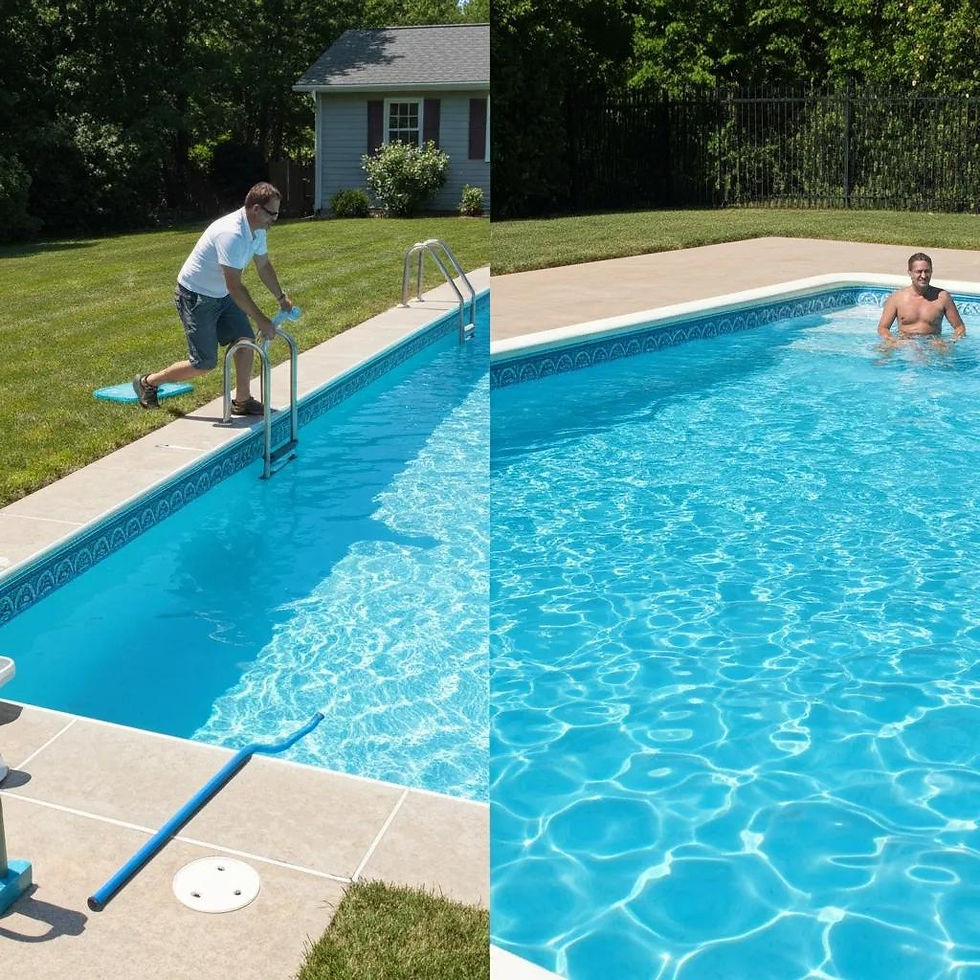
Durability comes down to material behavior: vinyl’s flexibility resists rigid cracking but makes it vulnerable to punctures and seam wear, while fiberglass’s composite shell resists algae and chemical penetration but can be damaged by heavy impact or by ground settling. Routine care reflects those differences: vinyl owners plan for liner replacements and carefully manage chemistry to slow degradation, while fiberglass owners focus on preserving the gel coat and performing milder chemical maintenance. Repair approaches differ—vinyl often needs liner patching or replacement, whereas fiberglass repairs are typically localized gel coat touch-ups or structural checks after settling. Knowing these regimes helps you anticipate true ownership effort and cost.
What Are the Durability Advantages and Disadvantages of Vinyl Pools?
Vinyl pools are easier to repair in some ways because a liner can be patched or replaced without tearing out structural walls; the flexible liner also tolerates modest ground movement. The downside is vulnerability to punctures from sharp objects, pets, or heavy equipment, and liners degrade faster under continual UV exposure or poor chemical balance. Simple homeowner habits—using a protective cover, keeping chemistry stable, and avoiding abrasive tools—can extend liner life and reduce lifecycle costs. Planning for those measures helps you budget future replacements.
How Durable Are Fiberglass Pools and What Maintenance Do They Require?
Fiberglass pools generally provide a long service life because the gel coat is non-porous and resists algae, meaning fewer chemicals and less manual scrubbing. Damage tends to be local—small chips from impacts or stress where settling occurs—so repairs are usually spot treatments rather than full resurfacing. Proper installation with correct backfill and drainage minimizes settlement risk and prolongs shell life; routine inspections of the gel coat catch issues early. For many homeowners, the lower routine maintenance translates into steadier, often lower annual upkeep.
Intro to design comparison: next we cover how customization and built-in features differ between materials and what that means for your backyard design.
Pool Type | Customization Attribute | Typical Level |
Vinyl liner pool | Shape and size flexibility | Very high; near-custom shapes and depths possible |
Vinyl liner pool | Built-in features | Features can be added on-site (shelves, steps) with design flexibility |
Vinyl liner pool | Finish options | Many liner patterns and colors, changeable at replacement |
Fiberglass pool | Shape and size flexibility | Limited to available molds but many modern options exist |
Fiberglass pool | Built-in features | Steps, benches, and other elements often come pre-molded |
Fiberglass pool | Finish options | Gel coat colors and textures available but less changeable after install |
This table shows vinyl favors flexibility while fiberglass emphasizes factory-integrated, ready-made features.
How Do Customization and Design Options Vary Between Vinyl and Fiberglass Pools?
Your choice depends on whether you value a bespoke footprint or a faster, integrated finish. Vinyl liners let you create nearly any shape, freeform edge, or depth because the liner is cut to fit the on-site frame—ideal for unusual lots and layered landscaping. Fiberglass limits you to mold options, but manufacturers now offer many modern shapes with built-in benches, tanning ledges, and steps, so you can often find a shell that fits your needs. Vinyl lets you refresh the surface look at liner replacement; fiberglass gives a durable gel coat that holds color and resists algae but is less easily changed without professional refinishing.
Here’s a compact comparison of design trade-offs to match pool style to your yard and lifestyle:
Vinyl delivers the most freedom for custom contours and unusual lot shapes.
Fiberglass provides factory-integrated features that reduce on-site work and give consistent ergonomics.
Choose based on whether you prioritise unique geometry or quicker, lower-maintenance finishes.
Short summary: pick vinyl for highly custom shapes; pick fiberglass when you want integrated features and predictable, faster installation.
What Custom Shapes and Sizes Are Possible with Vinyl Pools?
Vinyl pools are best when your lot has irregular lines, slopes, or you want specific depth profiles. Liners can be fabricated to match almost any frame—freeform lagoons, engineered vanishing edges, and stepped depths that follow landscape tiers are all possible. Keep in mind that complex shapes can increase excavation and liner fabrication costs, so factor custom labor and reinforcement into your budget. If your yard requires a non-standard footprint or you want a very specific look, vinyl is often the most practical route.
What Design Limitations and Features Are Typical for Fiberglass Pools?
Fiberglass pools are constrained by the molds manufacturers produce, so very bespoke shapes may not be available. Still, many manufacturers offer extensive catalogs of contemporary designs that meet most homeowner needs. Integrated features—built-in steps, benches, tanning ledges—are common and reduce the need for on-site construction, shortening the timeline and lowering surprise costs. When a mold matches your design, fiberglass is a streamlined path to consistent quality and predictable installation. The choice comes down to mold availability versus the benefit of factory-made features.
What Is the Typical Installation Process and Timeframe for Vinyl vs. Fiberglass Pools?
Installation timelines reflect construction methods: vinyl pools require staged on-site work—site prep, wall or frame assembly, liner fitting, plumbing, backfill, and finishing—each step needing sequencing and sometimes waiting for inspections or compaction. Fiberglass pools shorten on-site time because the shell arrives pre-formed; the critical path focuses on excavation, shell delivery and crane placement, plumbing tie-ins, backfill, and final decking. Common delays include weather, permit hold-ups, and unexpected site issues like groundwater or root systems. Knowing typical steps and durations helps you plan landscaping and pick the right season for construction.
Below is a numbered overview of typical installation steps so you know what to expect and when work will happen.
Site preparation and excavation: grading, setting elevations, and removing obstructions.
Structural work: assembling walls/frames for vinyl or preparing a pad for the fiberglass shell.
Pool placement/fitting: liner installation for vinyl or crane placement for the fiberglass shell.
Plumbing, filtration, backfill, and decking: final mechanical connections and surface finishes.
Summary: vinyl installations often take longer on-site due to staged assembly, while fiberglass shifts time toward transport logistics and specialized equipment. Both require careful coordination of inspections and proper backfill.
How Long Does Vinyl Pool Installation Take and What Are the Steps?
Vinyl installs typically take several weeks from start to finish, depending on site complexity and local inspection schedules. Excavation, wall assembly, liner fitting, plumbing, backfill, and finishing each take days and can require waiting for inspections or compaction testing. Weather and access can extend schedules, especially when engineered backfill or retaining structures are needed. Proper sequencing—finishing drainage and compaction before liner fitting—helps avoid premature liner wear and alignment problems. Plan for contingencies and expect longer on-site timelines than prefabricated options.
Why Is Fiberglass Pool Installation Faster and What Does It Involve?
Fiberglass pools are often installed in a matter of weeks because the shell is built in a factory, eliminating on-site shell construction and cure times. The process centers on precise excavation, safe transport and crane placement of the shell, quick plumbing hookups, and backfill and surface finishes. These steps are logistics-heavy but compress on-site labor and waiting times. Yard access for delivery and crane operation is a key scheduling factor—tight lots may need special planning. When logistics align, fiberglass installations usually finish sooner with fewer on-site variables.
How Do Local Factors in Windsor and Essex County Affect Your Pool Choice?
Local climate, soil types, and municipal permitting in Windsor and Essex County affect which pool type is more practical and cost-effective. Freeze-thaw cycles can shift ground and affect liner tension in vinyl pools, while groundwater and expansive clay soils can complicate backfill and require engineered solutions for either shell. Permit timelines and inspection checkpoints vary by municipality and can add lead time; seasonal construction windows influenced by local weather also affect start dates and winterization planning. Addressing these local variables early reduces surprises and helps determine whether a lower-upfront option makes sense for your site.
Local factors checklist intro: the bullets below highlight site and regulatory items Windsor/Essex homeowners should review before choosing material and contractor.
Freeze-thaw cycles and seasonal temperature swings that affect liner tension and backfill strategy.
Soil type and groundwater levels that may require engineered drainage, frost protection, or special backfill.
Municipal permit requirements and inspection timing that influence project schedule and compliance.
Summary: tackling these local concerns early helps you pick the pool material and construction approach that minimizes risk and cost overruns.
Santarossa Group’s local experience in Windsor and Essex County helps streamline permit navigation and site evaluation. We offer free site evaluations to assess soil type, drainage, and permit needs so you get a site-specific recommendation. That on-site review uncovers hidden costs and constraints—crane access, engineered backfill, or extra site prep—that affect whether vinyl or fiberglass fits your property best. A free, detailed proposal gives you the data you need to choose confidently.
How Does the Windsor Climate Influence Vinyl and Fiberglass Pool Durability?
Windsor’s seasons—hot summers and cold winters with freeze-thaw cycles—affect materials differently. Vinyl liners can be stressed by ground heave and shifting liner tension, while prolonged summer UV accelerates fading and seam wear. Fiberglass gel coat holds up well under UV and resists algae, but poor winterization or inadequate drainage can still stress shell interfaces and plumbing during freeze-thaw. Seasonal maintenance—proper winterizing for vinyl and confirmed drainage for fiberglass—reduces climate-related wear. Knowing local seasonal demands helps you choose the right material and maintenance plan.
What Local Soil and Permit Considerations Should Homeowners Know?
Soils in the Windsor and Essex area—from clay to loam—determine excavation methods, drainage plans, and whether engineered solutions or retaining structures are needed. High water tables may require sump systems or special backfill to protect a shell or liner. Permit processes differ across municipalities and can add lead time; common inspection points include structural backfill, plumbing, and final safety checks. An early site assessment uncovers these variables so you can factor them into timeline and budget instead of discovering them mid-build.
Intro to local permit checklist: knowing these municipal touchpoints helps homeowners prepare documentation and set realistic timelines.
Confirm municipal permit application requirements and typical review times.
Identify required inspections (e.g., excavation, plumbing, electrical) and schedule them into your timeline.
Assess whether engineered backfill or drainage plans will be required by local authorities.
Summary: local soil and permit realities can shift the economics between vinyl and fiberglass, so evaluate them early.
What Are Common Questions About Vinyl vs. Fiberglass Pools?
We answer frequent buyer questions to highlight the most relevant decision points: upfront cost, liner life, maintenance expectations, and installation timelines. Short, practical answers below are optimized for quick comparison so you can move toward a decision. After these Q&As, a brief “next steps” section explains how to get a site evaluation and tailored quotes from a local provider.
Which Pool Type Is Cheaper Upfront: Vinyl or Fiberglass?
Vinyl pools are usually cheaper up front because liners and on-site assembly materials cost less than a prefabricated fiberglass shell plus delivery and crane placement. The exact difference depends on pool size, site prep, and features—restricted access or difficult terrain can raise fiberglass logistics costs. If initial budget is your priority, vinyl often makes the most sense; but remember to consider lifetime costs, since liner replacements can shift the total ownership expense over time. Compare both immediate price and projected maintenance when choosing.
How Long Does a Vinyl Pool Liner Last Compared to Fiberglass Shells?
A vinyl liner typically lasts between 7 and 15 years, depending on liner gauge, maintenance, chemical balance, and UV exposure—good care and proper winterization can push the upper range. Fiberglass shells commonly offer a much longer service life—often 25 years or more—because the composite shell and gel coat are more resilient and less permeable to chemicals, usually needing only occasional spot repairs. Factor liner replacement cycles into vinyl cost projections and compare them with fiberglass’s lower-frequency repairs when estimating ownership costs.
Short next steps: after you weigh technical differences and local factors, a targeted site evaluation will show which option best fits your budget and yard. Santarossa Group provides free site visits and detailed proposals for inground pool installs (vinyl and fiberglass), liner replacements, and concrete finishing. Our local expertise in Windsor and Essex County helps homeowners understand permit timelines, site-prep needs, and a tailored cost estimate so you can make a confident decision.
Schedule a site evaluation: Have a local contractor inspect soil, access, and permit requirements.
Compare tailored quotes: Review full cost-of-ownership projections, not just the upfront price.
Plan installation timing: Schedule construction to suit local seasonal windows and avoid winterization issues.
Frequently Asked Questions
What are the environmental impacts of vinyl and fiberglass pools?
Both options have environmental considerations. Vinyl pools use PVC liners, which involve chemical production and create waste when disposed of. Fiberglass pools are more durable and require fewer replacements, but their manufacturing consumes energy and has emissions. Weigh production impacts, lifespan, and disposal when considering environmental effects.
Can I install a vinyl or fiberglass pool myself?
DIY installation is not recommended for most homeowners. Vinyl pools need precise measurements, framing, and plumbing work that can be difficult without experience. Fiberglass pools require heavy equipment for delivery and crane placement plus accurate site prep. Hiring professionals ensures code compliance, reduces long-term risk, and usually saves time and money in the long run.
What are the warranty differences between vinyl and fiberglass pools?
Warranties vary by manufacturer and product. Vinyl liners commonly carry warranties from about 10 to 20 years, usually covering manufacturing defects rather than wear and tear. Fiberglass shells often have longer warranties—frequently 25 years or more—covering structural defects. Read warranty details carefully for exclusions and maintenance requirements that preserve coverage.
How do I maintain the water quality in vinyl and fiberglass pools?
Both pool types need regular testing and balancing of pH, alkalinity, and sanitizer levels. Vinyl pools may require more frequent chemical adjustments due to liner sensitivity, while fiberglass pools often need fewer chemicals thanks to the non-porous gel coat. Regular skimming, vacuuming, and maintaining filtration are essential for clear, safe water in either case.
What are the aesthetic options available for vinyl and fiberglass pools?
Vinyl pools offer many liner patterns and colors that can be changed at replacement, giving ongoing customization. Fiberglass pools are limited to existing mold shapes and gel coat colors but commonly include integrated features like steps and benches for a sleek look. Choose based on whether you want periodic surface updates or a durable, factory-finished appearance.
Are there any safety features unique to vinyl or fiberglass pools?
Both pool types can include safety options. Vinyl pools can use safety covers, alarms, and custom shallow areas for children because of liner flexibility. Fiberglass pools often have built-in steps and benches that make entry and exit safer. Either type can be fitted with fencing, alarms, and other safety equipment to meet local regulations.
Conclusion
Deciding between vinyl and fiberglass pools comes down to balancing upfront cost with long-term maintenance and durability. Vinyl gives you maximum design flexibility and a lower initial price; fiberglass offers faster installs and lower routine upkeep. Understanding these differences helps you choose the option that fits your backyard goals and budget. For personalized help and a free site evaluation, reach out to Santarossa Group — we’ll give you a tailored recommendation so you can move forward with confidence.


Comments