Fiberglass vs Vinyl Pools: A Practical Backyard Comparison for Windsor & Essex County Homeowners
Choosing between a fiberglass shell and a vinyl liner inground pool is one of the biggest backyard decisions a homeowner can make. This guide breaks down what each system is, how they compare on price, upkeep, durability and design flexibility, and which choice fits Windsor and Essex County conditions best. You’ll find clear pros and cons, realistic timelines, weekly and seasonal maintenance expectations, a simple decision checklist tied to budget and lifestyle, plus side-by-side comparison tables and local considerations. We also explain how Santarossa Group installs both types locally and how to request a free site evaluation to see what works on your property.
What makes fiberglass pools a strong choice for your backyard?
Fiberglass pools arrive as factory-molded shells with a smooth gelcoat finish that resists porosity, staining and algae. The one-piece composite structure is rigid and reduces the need for surface repairs, and when installed correctly it handles freeze–thaw conditions well. Homeowners usually see quicker project timelines, fewer weekly chemical adjustments and a comfortable, non-abrasive surface that’s easy to keep clean—features that make fiberglass a low-maintenance option for busy families.
Many fiberglass models come with built-in benches, molded steps and tanning ledges delivered with the shell, which shortens on-site work and improves usability for kids and older swimmers. Gelcoat color choices provide subtle, long-term finishes that blend with your landscaping. These convenience and comfort features feed directly into durability and lifetime ownership cost considerations.
For Windsor and Essex County properties, faster installs and simpler maintenance can be especially practical because local seasonal patterns often favor systems that need less off-season intervention. Santarossa Group installs fiberglass shells throughout the region and offers free site evaluations to confirm access, drainage and fit.
Top homeowner benefits of fiberglass:
-
Non-porous gelcoat resists algae and staining for easier upkeep.
-
Lower routine maintenance and reduced chemical use versus porous finishes.
-
Shorter on-site installation thanks to prefabricated shells.
-
Comfortable, smooth surfaces with integrated features like benches and tanning ledges.
These advantages set the stage for comparing durability and long-term maintenance expectations.
How durable are fiberglass pools over time?
Fiberglass pools are known for long service life when installed on well-prepared sites. The gelcoat creates a continuous, non-porous barrier against chemicals and biological growth, while the composite backing spreads loads to reduce point stresses. Proper installation, drainage and routine maintenance are the keys — when those are handled, a fiberglass shell can provide decades of reliable use. Given Windsor and Essex County’s freeze–thaw cycles, good site design and professional installation are important to preserve that durability.
Why is low maintenance a clear advantage with fiberglass?
The smooth gelcoat surface discourages algae and reduces scrubbing, which lowers weekly upkeep and chemical dosing. Typical care focuses on filter checks, occasional vacuuming and maintaining balanced water chemistry—far less brushing and resurfacing than porous finishes. That saves time and operating costs across seasons and simplifies winterizing, making fiberglass a practical choice for households that prefer minimal pool chores.
How does fiberglass installation save time?
Because the shell is made off-site, on-site work centers on excavation, setting the pool, plumbing hookups and backfill rather than forming and curing walls. That prefabrication often shortens the active construction window to weeks (permit and site-prep permitting), reducing homeowner disruption and exposure to weather delays. Coordinated project management and logistics are still essential to capture these timeline advantages.
What comfort and surface features come standard with fiberglass pools?
Fiberglass gelcoat gives a soft, non-abrasive surface that’s gentle on bare feet and swimsuits. Factory-integrated benches, contoured steps and tanning ledges arrive with the shell so you get usable features without extra on-site work. Color and finish selections help the pool blend with your yard, and the smoother surface typically shows a cleaner water line than textured finishes—contributing to everyday satisfaction and usability.
Why choose vinyl liner pools for customization and affordability?
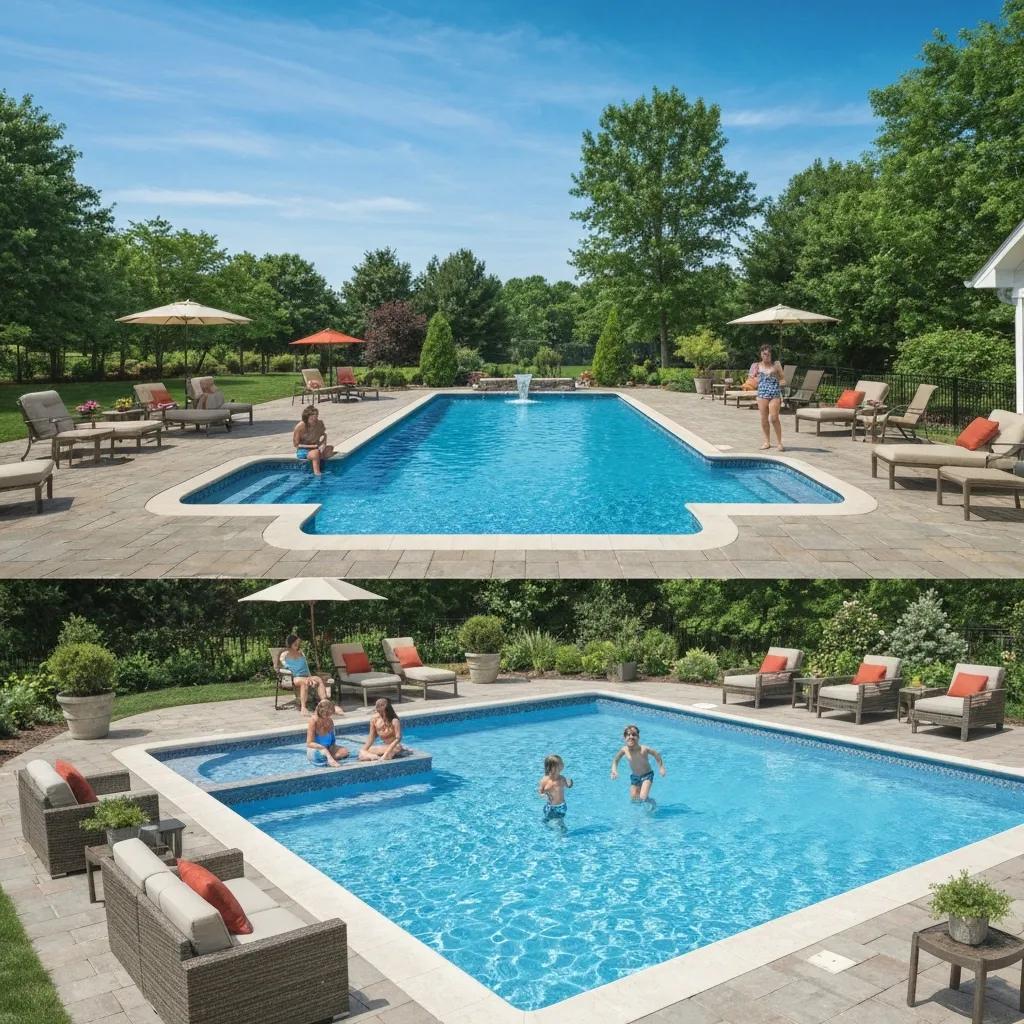
Vinyl liner pools use a structural wall and floor system lined with a flexible vinyl membrane to create the finished interior. That approach supports custom shapes, depths and staged features at a typically lower upfront cost than many fiberglass or concrete options. The liner’s soft surface is family-friendly, and replacing the liner every 7–12 years offers a straightforward way to refresh the pool’s look without rebuilding the shell. Vinyl is a solid pick when bespoke layouts or lower initial investment are priorities.
Because vinyl walls are built on-site, they adapt well to irregular lot shapes and custom depth transitions. That makes accessory integrations—like attached spas, special steps or unique lighting—easier to plan. The next sections explain liner-replacement planning and compare lifecycle costs with fiberglass.
Santarossa Group installs vinyl liner pools and handles liner replacements, so we can support both the initial build and ongoing updates.
Key homeowner advantages of vinyl liner pools:
-
High customization in shape, size and depth to fit unique backyards.
-
Lower initial installation cost compared with many prefabricated fiberglass shells.
-
Soft, comfortable interior surface that’s gentle on skin and feet.
-
Visual updates available through liner replacement without structural overhaul.
How does vinyl customization improve backyard design?
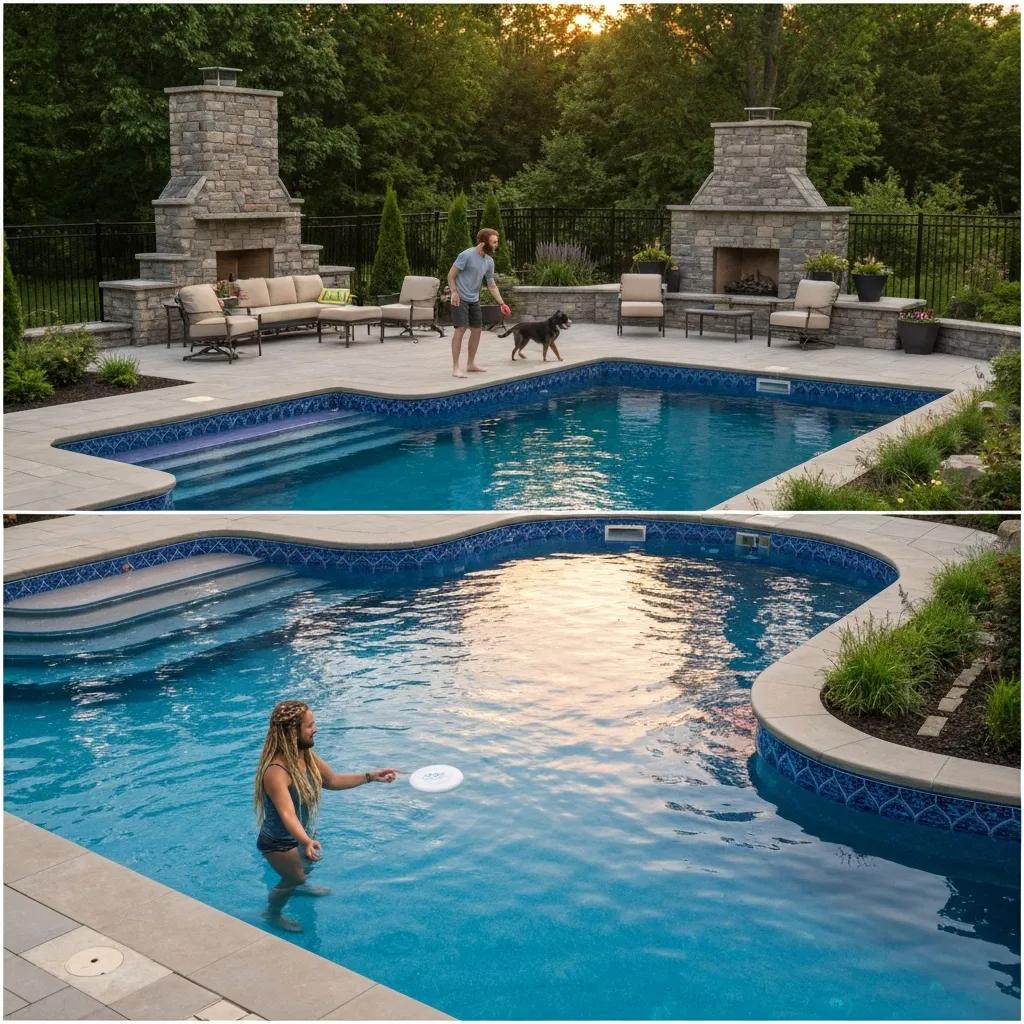
Vinyl liners let you create irregular shapes, variable depths and custom step placements to match lot constraints and landscaping plans. Patterned liners—from stone looks to bright aquatic designs—help the pool tie into surrounding hardscape and plantings. Adding built-in steps, attached spas or specialty lighting is typically straightforward, making vinyl a great choice when you want a highly tailored outdoor living space.
Why are vinyl pools more budget-friendly at first?
Vinyl systems use less expensive wall materials and don’t require a factory-molded shell, so manufacturing and delivery costs are lower. On-site work can be phased to control labor expenses. The trade-off: liners need periodic replacement and seams can be vulnerable over time, so total cost of ownership should account for liner life and maintenance. That helps homeowners weigh short-term savings against long-term planning.
What are the comfort benefits of vinyl liners?
Vinyl liners provide a cushioned, non-abrasive surface that’s comfortable for children, pets and bare feet and avoids the roughness of plaster or aggregate. Cleaning is straightforward with gentle brushes and the right vacuuming techniques, though seams and fittings need attention to avoid algae. The tactile benefits and visual variety make vinyl pools family-friendly and adaptable to changing tastes.
How does liner replacement create design refresh opportunities?
Most liners last roughly 7–12 years depending on chemicals, UV exposure and wear. Replacing the liner is a planned maintenance event that refreshes the pool’s look—owners can choose new patterns, lighter or darker bases to change water color, or address seam stress without rebuilding the structure. Replacement requires budgeting, scheduling (often off-season) and brief downtime, but it’s a predictable way to update your pool’s appearance over time.
Quick comparison: Cost, maintenance and durability
Here’s a clear look at where each material shines. Fiberglass emphasizes low maintenance and fast installs with higher initial cost versus basic vinyl. Vinyl scores on customization and lower upfront price but needs periodic liner replacement and careful seam maintenance. Fiberglass’ non-porous gelcoat resists algae; vinyl offers flexible shapes and easier visual updates. The table below summarizes the core trade-offs.
How pool types compare across common homeowner criteria:
|
Attribute |
Fiberglass Pool |
Vinyl Liner Pool |
|
Initial Cost |
Moderate to higher upfront for shell production and delivery |
Lower upfront thanks to site-built walls and liner |
|
Routine Maintenance |
Lower chemical and cleaning needs |
Moderate maintenance; liner care and seam checks |
|
Durability |
High resistance to algae and staining |
Good with care; liners can puncture or age |
|
Installation Time |
Faster—often weeks after permit and site prep |
Moderate—site-built steps can extend schedule |
|
Customization |
Limited to factory shapes and integrated features |
High flexibility in shape, depth and liner design |
Typical homeowner maintenance routines differ:
-
Fiberglass weekly tasks: Check filter, test and balance chemistry, skim and vacuum as needed.
-
Vinyl weekly tasks: Test chemistry, gently brush seams, inspect for tears or loose fittings, vacuum debris.
-
Seasonal tasks for both: Winterize equipment, inspect covers, and schedule a professional check before reopening.
What about initial vs. long-term cost?
Upfront costs depend on shell fabrication and delivery for fiberglass versus on-site wall construction and liners for vinyl. Fiberglass may cost more initially but often lowers long-term resurfacing and maintenance expense; vinyl is less expensive up front but requires regular liner replacements and seam attention. When estimating lifetime cost, include replacement cycles, chemical use, heating energy and occasional pro service to find the right balance for your budget.
How do maintenance needs differ in practice?
Fiberglass usually needs less brushing and lower chemical dosing because the gelcoat discourages algae. Vinyl needs careful liner care, cautious vacuuming to avoid punctures and frequent seam inspections to prevent leaks. Those differences influence whether owners hire regular professional service or handle maintenance themselves and affect time commitments and service budgets over the years.
How does algae resistance compare?
Fiberglass’s smooth, sealed gelcoat makes algae harder to attach, simplifying prevention. Vinyl is smooth too but has seams and fittings where algae can hide if not cleaned. Failure modes differ: poor site prep can stress a fiberglass shell, while vinyl liners can degrade from chemicals or punctures. Balanced chemistry, good filtration and routine cleaning are key for both systems.
How long does installation usually take?
Fiberglass installs are typically quicker because the finished shell is set and crews complete plumbing and backfill—often a few weeks once permits and site prep are done. Vinyl requires more on-site assembly—wall construction, floor prep and liner fitting—which can extend timelines but offer flexible phasing for complicated sites. Permitting, soil conditions and weather affect either schedule; early planning reduces delays.
Does customization affect resale value?
Customization can improve curb appeal but its effect on ROI depends on buyer preferences and neighborhood trends. Intricate shapes and high-end finishes may attract buyers who value outdoor living; simple, low-maintenance pools can appeal to a broader market. Vinyl’s shape flexibility supports bespoke designs, but liner lifecycle costs should be disclosed to buyers. Fiberglass’s reputation for quick installs and low upkeep can be a selling point for families wanting a turnkey backyard.
Local factors Windsor & Essex County homeowners should weigh
Climate, soil, budget, maintenance willingness and design goals shape the best choice for your property. Freeze–thaw cycles, drainage and ground movement call for careful site evaluation. Permitting timelines also affect when a project can proceed. Match pool type to lifestyle—low-maintenance relaxation or custom entertainment—and consider the checklist below to translate local site conditions into a material recommendation.
|
Consideration |
Impact on Fiberglass |
Impact on Vinyl |
|
Freeze-thaw & ground movement |
Needs good drainage and engineered backfill to protect the shell |
Flexible liner tolerates slight movement but walls still need solid support |
|
Soil type & drainage |
Poor drainage raises risk unless mitigated with proper site work |
Requires solid wall anchoring and planned drainage |
|
Permitting & local codes |
Faster install can help meet seasonal windows |
On-site builds may need more inspections and time |
|
Service access & replacement |
Lower maintenance reduces service frequency |
Liner replacement should be planned for access and timing |
Practical decision checklist for Windsor & Essex County:
-
Prioritize low maintenance: Lean fiberglass for minimal weekly care.
-
Prioritize custom shapes: Lean vinyl when bespoke layouts and depth profiles are essential.
-
Prioritize budget timing: Choose vinyl for lower initial cost; choose fiberglass to reduce long-term interventions.
How does budget steer your choice?
Your budget determines whether you invest more up front for lower-maintenance fiberglass or choose a lower-initial-cost vinyl pool that needs liner replacements later. If funds are limited now, vinyl can be a practical starting point—just include liner lifecycle costs in your long-term budget. Financing and phasing landscaping can help, but a clear lifetime-cost estimate prevents surprises.
How do maintenance preferences matter?
If you want minimal weekly chores, fiberglass is the natural fit. If you enjoy hands-on care or want frequent aesthetic refreshes, vinyl can work well. Professional service plans reduce the workload for either option; matching your maintenance habits to the pool type helps keep ownership sustainable and enjoyable.
How do design goals change the decision?
Choose vinyl when unique shapes, integrated landscape features or custom depth transitions are priorities. Choose fiberglass if you prefer a durable, ready-to-swim package with built-in social features and fewer finish choices. Clear design goals early on prevent scope creep and keep your budget on track.
How do local climate and soils affect performance?
Freeze–thaw cycles and regional soil types mean good drainage, site testing and engineered backfill are essential. Fiberglass performs well on stable, well-drained sites; vinyl needs solid wall assembly and drainage to protect liners. A contractor site assessment or geotechnical observation reduces long-term risk and helps the chosen system perform through seasonal cycles.
How Santarossa Group supports your pool project in Windsor & Essex County
Santarossa Group provides end-to-end support for inground pool installation locally—fiberglass shells, vinyl liner installations and liner replacements. We focus on personalized service, practical design guidance and free site evaluations so you understand access, drainage and budget before you commit. Local expertise and coordinated project management help reduce homeowner risk and keep projects on track.
Our free site evaluation includes an on-site look at grade and access, visual soil and drainage checks, a preliminary design discussion aligned with your priorities, and an initial budget range to guide next steps. That assessment translates technical site factors into clear recommendations and realistic timelines so you can compare fiberglass and vinyl on equal footing.
We manage installation quality through careful material selection, milestone inspections and supplier coordination to ensure components arrive and are installed per manufacturer guidance. Post-installation, we provide maintenance advice and seasonal planning—like winterization and liner-replacement timing—to help protect your investment.
Local homeowners regularly tell us they value clear communication, pragmatic design input and smooth coordination during builds. Many appreciate having one local partner who can install fiberglass or vinyl and handle liner replacements as needed. We encourage prospective clients to request a free site evaluation so we can map your backyard goals to Windsor & Essex County realities and recommend the best fit.
What’s included in Santarossa Group’s free site evaluation?
Our free site evaluation looks at property access, slope and drainage while we discuss your goals, features, budget and timing. We’ll give a preliminary assessment of whether a prefabricated fiberglass shell or a site-built vinyl option suits the lot and outline any permit or soil-testing steps. This early guidance helps avoid surprises during design and permitting and sets up a practical proposal and schedule.
How does Santarossa Group ensure installation quality and durability?
We emphasize choosing materials that match local conditions, scheduling inspection checkpoints during installation and coordinating suppliers so parts arrive on time and are installed correctly. We also offer post-installation support and maintenance guidance—covering winterization and liner-replacement planning—so you know how to protect your pool long term. These steps reduce common risks and support reliable performance.
What do local customers say about their pools?
Local feedback commonly highlights professional communication, useful design recommendations and installations completed with respect for timelines and site limitations. Homeowners value having a consistent local partner for both fiberglass installs and vinyl liner services. If you’re exploring options, review our service pages and request a free site evaluation to see how your property compares to recent local projects.
Frequently Asked Questions
What are the environmental impacts of fiberglass and vinyl pools?
Both pool types have environmental trade-offs. Fiberglass often uses fewer chemicals and less frequent surface work, which can lower water and chemical runoff. Vinyl pools may need more regular chemical management and liner replacements, increasing material use over time. Consider maintenance habits and replacement cycles when weighing environmental impact.
How do seasonal weather changes affect pool maintenance?
Seasonal shifts affect both systems. In Windsor and Essex County, proper winterization is crucial to avoid freeze–thaw damage. Fiberglass usually requires less off-season attention, while vinyl liners may need closer monitoring during colder months. Plan seasonal tasks to protect your pool and reduce repair risk.
Can I install a pool myself or should I hire a professional?
We recommend hiring a professional for either fiberglass or vinyl pools. Pros bring site-evaluation experience, proper installation techniques and knowledge of local regulations—avoiding costly mistakes like leaks or structural issues. Professional installation saves time and reduces long-term risk.
What are the best practices for maintaining pool water quality?
Test and balance pH, alkalinity and sanitizer levels regularly to prevent algae and keep water safe. Skim debris, vacuum as needed and maintain proper filtration and circulation. Adjust routines seasonally based on use and weather, and schedule periodic professional checks.
What heating options work for fiberglass and vinyl pools?
Both pool types work with gas heaters, electric heat pumps and solar systems. Gas heats quickly but costs more to run; heat pumps are more efficient and environmentally friendlier but slower; solar reduces operating costs but requires panels and space. Choose based on budget, usage and local climate.
How do I choose the right pool accessories?
Pick accessories that match how you’ll use the pool—covers, ladders, lighting and safety features like alarms or fences. Fiberglass often includes built-in benches and steps, while vinyl may need custom additions. Consider family needs, safety and aesthetics when selecting accessories.
Which pool type is better: fiberglass or vinyl?
There’s no single “better” choice—only the best fit for your priorities. Pick fiberglass if you want lower weekly maintenance, faster installation and a durable, non-porous surface that resists algae. Pick vinyl if you need extensive shape or depth customization and want a lower upfront cost with planned liner replacement. Balance budget, maintenance preference and design flexibility to decide which suits you.
How long do fiberglass pools last?
With proper installation and upkeep, fiberglass pools often last many decades. Longevity depends on site drainage, installation quality and consistent chemical balance. Regular maintenance and professional inspections help extend service life and protect your investment.
What is the typical lifespan of vinyl pool liners?
Vinyl liners usually last about 7–12 years, though lifespan varies with chemical exposure, UV, wear and puncture risk. Plan for liner replacement as part of long-term ownership—watch for fading, frequent leaks or seam issues as signs it’s time to replace.
Is fiberglass installation faster than vinyl?
Yes—because fiberglass shells are prefabricated, installation is generally faster once excavation and permits are in place. Vinyl requires more on-site assembly and can take longer, especially for complex shapes or difficult sites. Either way, permits and site prep affect schedules.
What are common disadvantages of vinyl liner pools?
Vinyl liners are vulnerable to wear, punctures and seam problems that require eventual replacement, and seams can trap algae if not cleaned. Replacement causes downtime and must be budgeted for. You can reduce risk with careful vacuuming, protective covers, routine inspections and planned replacement windows. For help planning a liner replacement or deciding which option suits your property, request a free site evaluation with Santarossa Group.
Conclusion
Both fiberglass and vinyl pools offer clear benefits depending on your lifestyle and budget. Understanding the trade-offs—maintenance, timeline, customization and long-term cost—helps Windsor and Essex County homeowners pick the right option. If you want local advice, request a free site evaluation from Santarossa Group and we’ll help match a pool to your backyard and your goals.