Essential Concrete Finishing Tools Every Contractor Needs for Durable, Attractive Slabs
The tools you pick for finishing concrete determine how a slab will perform and look for years. This guide walks homeowners and contractors through the must-have finishing tools, explains how each one affects surface quality, and gives practical rules for choosing equipment for driveways, patios, foundations, and decorative work. You’ll find clear comparisons of leveling gear, floats and trowels, edgers and groovers, plus an overview of battery-powered and smart tools shaping job sites in 2025. We cover material trade-offs (magnesium vs. steel), vibration and consolidation basics, and best practices that reduce cracking and long-term maintenance. Each H2 section includes short, actionable lists and comparison tables so you can make quick, confident decisions — or know when to call a local pro.
What Are the Essential Concrete Finishing Tools Every Contractor Needs?
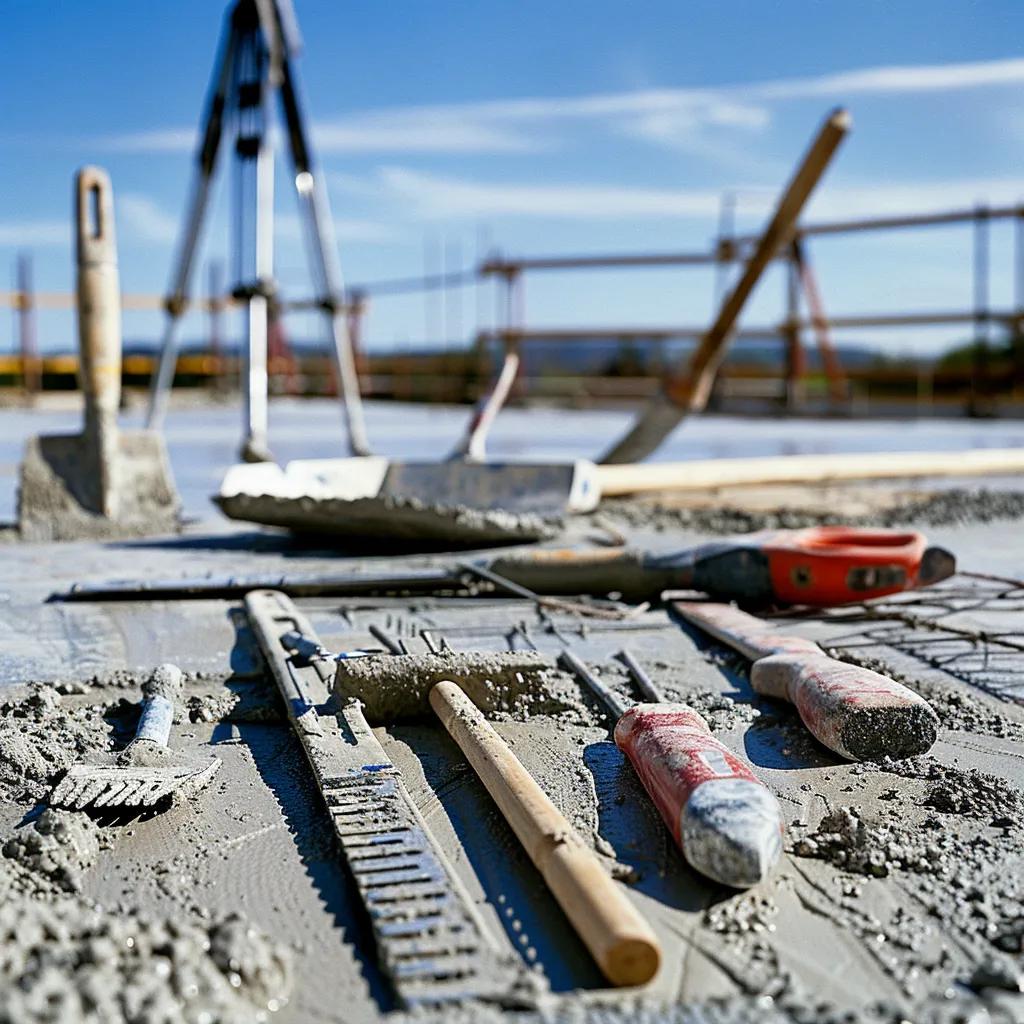
Every reliable finishing crew carries tools that let them strike off, consolidate, finish, edge, and texture a slab with repeatable results. Using the right set prevents common problems like dusting and spalling. Key tools cover initial strike-off (screed), surface flattening (bull float), smoothing and burnishing (hand and power trowels), perimeter shaping (edger), joint creation (groover), and consolidation (vibrator). Tool choice depends on project size — manual tools for small patios, mechanized equipment for large slabs — and on finish goals like exposed aggregate or a high-sheen interior floor. Below is a quick-reference checklist crews rely on to match tools to project type and timing.
Which tools handle leveling on a concrete pour?
Leveling tools remove excess material and set the grade. Manual screeds or mechanical/laser screeds control strike-off, bull floats spread paste and smooth minor highs and lows, and vibrating or laser-guided screeds give precision on large pours. Manual screeds work well for small residential slabs and simple driveways where visual grade control is fine; laser or vibrating screeds are better when tight tolerances matter. Bull floats follow immediately after screeding to flatten peaks and work bleed water — timing here directly affects the final surface. Proper leveling cuts rework and creates a flat plane that floats and trowels can refine into a lasting finish.
What tools shape surface smoothness and texture?
Surface tools determine traction, appearance, and wear. Hand floats and trowels produce dense, smooth interior finishes; brooming and texture tools create slip-resistant patterns for exterior walkways and driveways. Magnesium floats are used early to embed aggregate and leave a matte surface, while steel trowels are used later to get a hard, burnished finish with more sheen. Choose texture to match the environment — broomed finishes improve traction in freeze-thaw climates, and exposed-aggregate methods reveal decorative stone. When hiring a contractor, ask what texture they plan and whether they’ll pair it with dowels or control joints to protect the finish.
Introductory table comparing essential tools:
|
Tool |
Main Purpose |
Common Uses |
|
Screed |
Strike-off to set grade |
Driveways, patios, foundations |
|
Bull float |
Initial surface leveling and closing |
Medium slabs, residential pours |
|
Hand trowel |
Final smoothing and burnishing |
Interior slabs, small patios |
|
Edger |
Shape and compact slab edges |
Walkways, driveways, slab perimeters |
|
Groover |
Form control joints |
All slab types |
How Do Different Types of Concrete Floats and Trowels Affect the Finish?
Floats and trowels control texture, density, and sheen by working the paste and embedding or smoothing aggregate. Tool material and size change friction and the final look: magnesium and aluminum floats are softer and used early to level without adding sheen; steel trowels are harder and used later to compact the surface and increase gloss. Power trowels speed up burnishing and keep consistency on large slabs, trading some edge control for productivity, while hand tools give finer control in tight areas. The usual sequence — early magnesium floating, intermediate steel finishing, and targeted hand troweling — produces durable surfaces tuned to use and exposure.
How do hand floats, bull floats, and power trowels differ?
Hand floats are for precise work near forms and on small patches where finish control matters. Bull floats are long-handled tools used right after screeding to level broad areas without the labor of hand-floating. Power trowels — ride-on or walk-behind — deliver fast, uniform burnishing on large commercial slabs and cut labor for big pours. Operator skill and safety needs factor into whether a crew rents or owns them for specific job volumes.
When should you pick magnesium over steel trowels?
Use magnesium floats in early finishing because they close surface voids with less friction and leave a slightly textured, matte surface suitable for later texturing or exposure work. Switch to steel trowels for final finishing when you want a dense, hard surface and higher sheen; steel compresses paste more effectively and is common for interior floors that need a polished look. Temperature, slump, and bleed rate affect timing — in hot weather, use magnesium earlier to avoid overworking the slab, then move to steel as the concrete firms. Match trowel material to traffic and wear expectations.
Introductory EAV table for floats and trowels:
|
Type |
Material / Typical Use |
Result / Finish |
|
Hand Float |
Aluminum or magnesium; small areas |
Matte, controlled texture |
|
Bull Float |
Aluminum with long handle; early stage |
Leveled surface, fewer ridges |
|
Power Trowel |
Steel blades; large slabs |
Dense, high-sheen finish |
Why Are Concrete Edgers and Groovers Important for Quality Finishes?
Edgers and groovers protect slab edges and guide where cracks form, helping control stress, reduce chipping, and preserve the look and lifespan of the slab. An edger rounds and compacts the perimeter to resist impact and spalling; a groover cuts a weakened plane that becomes a control joint and directs shrinkage cracking to predictable locations. Timing matters — edging too early can smear aggregate, and grooving should happen when the slab is set enough to hold the joint but before uncontrolled cracking starts. Proper edge and joint practice lowers maintenance and keeps residential properties looking sharp.
How do edgers reduce cracking and increase durability?
Edging compacts and rounds the slab perimeter so impacts and freeze-thaw cycles are less likely to chip edges. By consolidating the outer layer and working off bleed water properly, an edged profile resists spalling and surface wear. Contractors watch bleed water and set times to avoid overworking edges, and they pair edging with joint layout to prevent edge-driven failure. In places like Windsor and Essex County, following these practices cuts down on repair calls and extends service life.
What are best practices for grooving control joints?
Grooving creates shallow control joints that guide shrinkage cracking and should be sized and spaced according to slab thickness and expected loads. Early-entry grooving works if timing is precise; for thicker or decorative slabs, saw-cutting later often yields cleaner joints. A common rule is to make grooves roughly one-quarter of slab thickness in depth and space them at regular intervals based on slab dimensions. Combine proper grooving with correct curing and, where appropriate, sealants to keep slabs durable and visually consistent.
Best-practice list for joint timing and spacing:
-
Groove Depth Rule: Cut grooves about one-quarter of the slab thickness to guide cracking predictably.
-
Spacing Guideline: Set control joints to limit unsupported widths and reduce random cracking.
-
Timing Consideration: Groove when the slab will hold a defined edge but before uncontrolled cracking begins.
Introductory EAV table for edgers and groovers:
|
Tool |
Main Purpose |
Value (Durability / Look) |
|
Edger |
Round and compact the slab perimeter |
Less chipping, cleaner edges |
|
Groover |
Create control joints early |
Predictable crack locations |
|
Saw |
Cut joints after hardening |
Precise joints, minimal surface damage |
What Advanced and Modern Concrete Finishing Tools Are Contractors Using in 2025?
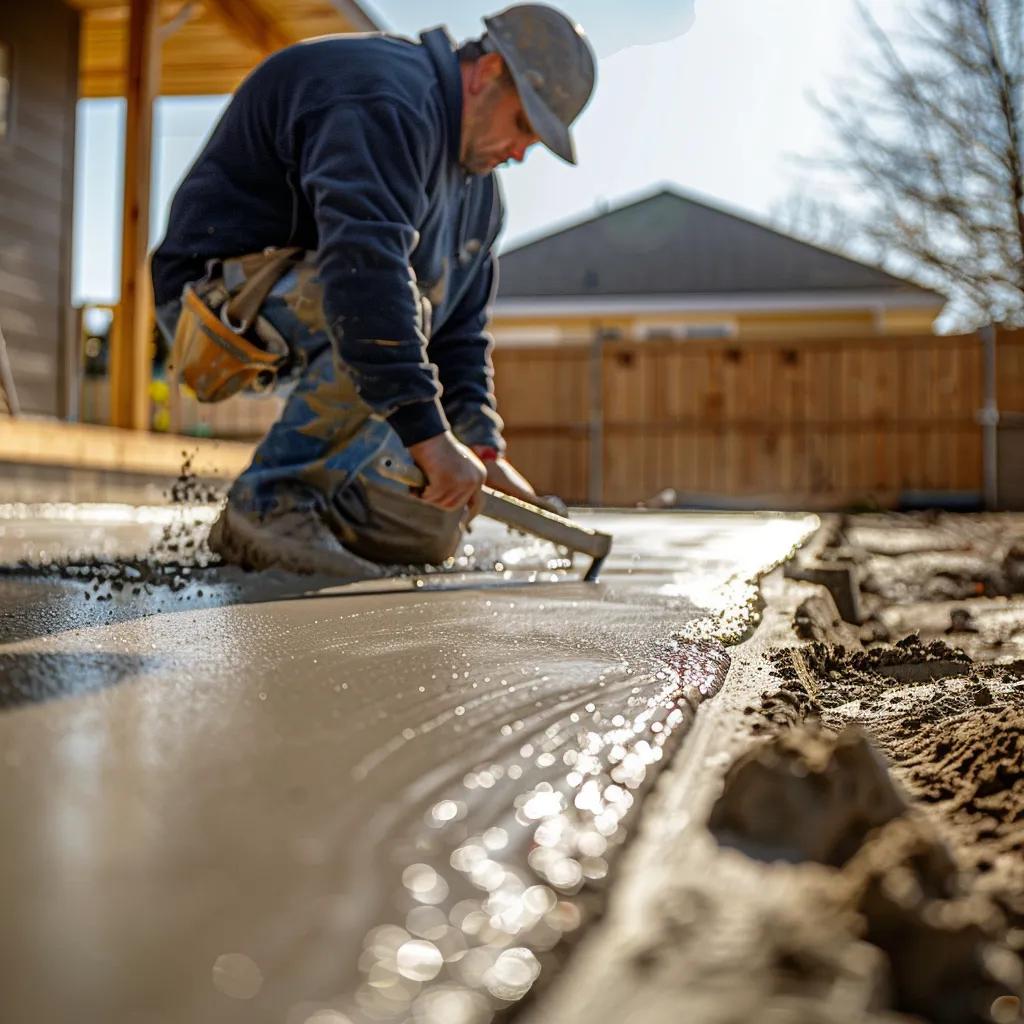
In 2025, finishing tech emphasizes cordless mobility, smart monitoring, and mechanization that improves consistency and cuts labor. Battery-powered trowels and cordless finishing tools are increasingly common for backyard and remote jobs where cords and generators are impractical. Smart tools that log runtime and maintenance help crews boost uptime and quality control. Power trowels and advanced vibrators remain essential for large projects because they deliver consolidation and surface uniformity at scale; sensor-enabled equipment helps standardize timing and reduce human variability. Santarossa Group is integrating modern equipment into select residential and decorative projects to deliver more consistent finishes and tighter jobsite efficiency for Windsor and Essex County clients.
How do power trowels and vibrators improve large pours?
Power trowels increase finishing speed and uniformity on slabs measured in hundreds or thousands of square feet, achieving density and sheen that’s hard to match by hand. Internal and external concrete vibrators remove trapped air and settle aggregate, improving compressive strength and reducing honeycombing. Together, proper vibration and mechanized troweling shorten sensitive cure windows and let crews finish earlier while preserving surface integrity. Renting is often cost-effective for occasional large jobs, while frequent large-scale work usually justifies purchasing equipment.
What advantages do battery-powered and smart finishing tools offer?
Battery-powered tools deliver mobility, lower noise, and reduced emissions on residential and confined sites, letting crews work in backyards or indoor ground-floor spaces without cords or generator exhaust. Smart features — runtime tracking, maintenance alerts, and performance telemetry — help predict service needs and keep finishing steps consistent across crews. Downsides include battery swap logistics and lower continuous power compared with corded setups, so contractors balance battery benefits with project scale. Homeowners benefit from quieter, cleaner work and contractors gain more predictable, documented results.
Introductory EAV table for modern tools and trends:
|
Tool |
Advantage / Drawback |
Value (Project Scale / Power) |
|
Battery Trowel |
Mobile and quiet; limited runtime |
Best for small-to-medium residential jobs |
|
Power Trowel |
Fast and productive; needs skilled operator |
Ideal for large slabs; often corded or rented |
|
Smart Vibrator |
Monitoring and consistency; higher cost |
Useful on critical pours where tracking matters |
How Does Using the Right Concrete Finishing Tools Impact Project Quality and Longevity?
The tools you use control key performance factors — compaction, finishing timing, joint integrity, and edge treatment — that together determine a slab’s durability and appearance. Correct vibration removes voids and boosts strength, timely floating and troweling reduce permeability and wear, and poor timing or inadequate tools cause dusting, early cracking, and costly repairs. In climates with freeze-thaw cycles like Windsor, choosing textures and joint strategies that match the environment reduces maintenance and extends service life. When homeowners evaluate contractors, attention to tool selection and execution is a reliable signal of long-term value.
How do tools help produce durable, attractive concrete?
Tools enable the physical steps that make a slab perform: consolidation (vibrators), strike-off and grade control (screeds), paste management (floats and trowels), and perimeter protection (edgers). Used at the right stages, each tool cuts common defects — vibration reduces voids and honeycombing, proper floating avoids delamination, and well-placed joints limit spalling. For decorative work, the right tools expose aggregates cleanly or make stamped patterns read sharply; matching tools to finish goals protects both function and design. Knowing how tools affect outcomes helps homeowners set realistic expectations and invest wisely in professional finishing.
Why do professional contractors like Santarossa Group invest in quality tools?
We invest in durable, well-maintained tools because consistent finishes, fewer callbacks, and predictable schedules deliver better outcomes and lower lifetime costs for homeowners. Santarossa Group uses modern equipment and proven finishing sequences to produce long-lasting, attractive slabs across Windsor and Essex County, applying local climate and building practice knowledge when choosing textures and joint strategies. Reliable tools improve crew efficiency, shorten finishing time, and let us provide transparent quotes grounded in realistic labor and equipment needs. If you’d like a local evaluation of finish options, Santarossa Group offers consultations and written quotes based on project scale and desired results.
Summary: how tools affect quality
-
Consolidation: Proper vibration reduces voids and raises strength.
-
Timing: The correct sequence of screeding, floating, and troweling avoids surface defects.
-
Jointing: Well-placed control joints limit random cracking and cut repair costs.
What Are the Most Common Questions About Concrete Finishing Tools Contractors Should Know?
Homeowners and new contractors commonly ask which core tools matter most, how to decide between hand and power gear, and which finishes suit particular uses. This FAQ section gives quick, practical answers and decision rules you can use when planning work or comparing bids. Short, actionable replies point readers to the deeper sections above for detailed guidance and comparison tables.
What are the five basic concrete finishing tools every contractor should own?
A competent finishing crew needs a core set that covers strike-off, consolidation, finishing, and edge/joint work to handle most residential jobs reliably. These five essentials form the backbone of quality execution and let crews adapt to slab size and finish needs without unnecessary rentals or delays. Use the list below when comparing contractors or shopping for starter equipment.
-
Screed: Sets the grade and performs initial strike-off for level slabs.
-
Bull Float: Smooths and evens the surface immediately after screeding.
-
Hand Trowel: Provides final smoothing and burnishing in detailed areas.
-
Edger: Shapes and compacts slab edges to prevent chipping.
-
Groover: Forms control joints to direct shrinkage cracks.
How do you pick the right float or trowel for a job?
Pick floats and trowels based on slab area, desired finish, and site conditions. For small slabs and tight edges, hand floats and trowels give better control; for medium-to-large slabs use bull floats early and consider power trowels for final burnishing when area and labor justify mechanization. Choose magnesium for early work or matte finishes, steel for final burnishing and higher sheen, and adjust timing for temperature and bleed water. If unsure, hire a professional whose tool choices match your project’s durability and look goals.
Introductory table summarizing FAQ decision rules:
|
Question |
Quick Rule |
When to Hire a Pro |
|
Best float/trowel |
Hand tools for small jobs, power for large areas |
Complex finishes or expansive slabs |
|
Joint method |
Groove early or saw-cut later depending on mix and timing |
Slabs with heavy loads or decorative requirements |
|
When to use battery tools |
Small or residential sites with limited access |
Remote/backyard pours where cords are impractical |
This guide covered core tools, material trade-offs, joint and edge strategies, and 2025 trends such as battery-powered and smart equipment — all presented as practical lists and comparison tables to help homeowners and contractors achieve durable, attractive concrete results.
Frequently Asked Questions
What should contractors consider when selecting concrete finishing tools?
Contractors should weigh project size, desired finish, and environmental conditions. Small jobs often do fine with manual tools; larger pours usually need mechanized equipment for efficiency and consistency. The finish — from exposed aggregate to polished floors — also dictates tool choice. Understanding the concrete mix, timing windows, and local climate helps avoid defects and deliver the intended result.
How can contractors maximize the longevity of concrete finishes?
Longevity comes from choosing the right tools, using them at the correct stages, and applying proper curing. Correct consolidation, timely floating and troweling, and thorough curing (moisture and temperature control) are essential. Regular maintenance and prompt repairs further extend service life.
What are the benefits of modern battery-powered finishing tools?
Battery-powered tools offer greater mobility, less noise, and lower emissions — ideal for residential and confined sites where cords and generators are impractical. They make access easier and reduce jobsite disruption. Contractors should plan for battery swaps and understand runtime limits when specifying cordless equipment.
How do smart finishing tools improve outcomes?
Smart tools provide data on runtime, maintenance needs, and performance, which helps standardize workflows and reduce human variability. Real-time monitoring and alerts improve consistency across crews and sites, leading to better-quality finishes and fewer surprises on critical pours.
What common mistakes should contractors avoid when finishing concrete?
Avoid mistimed tool use, poor surface prep, and ignoring site conditions. Troweling too early, failing to consolidate, or not accounting for temperature and humidity can cause delamination, weak spots, and premature cracking. Awareness and disciplined timing prevent most common failures.
Why is joint placement so important in finishing concrete?
Proper joint placement controls where shrinkage cracks occur and manages stress in the slab. Well-timed, correctly sized joints minimize random cracking and protect the slab’s appearance and durability. Make joints when the concrete can hold an edge but before uncontrolled cracking starts.
Conclusion
Choosing the right concrete finishing tools matters — it’s how you get slabs that last and still look good years later. Understanding each tool’s role and timing helps contractors deliver better results and reduces long-term maintenance for homeowners. If you want help selecting tools or comparing finish options, Santarossa Group can provide a local evaluation and a written quote tailored to your project and finish goals. Reach out to learn more and get a plan that fits your budget and expectations.